


Last Updated: November 21, 2026
Quick Summary
Prevent tea stains on white ceramic mugs by rinsing right after each use, washing gently with mild dish soap, and never letting a tea bag sit in the mug overnight. Tannins bond to the glaze over time, so catching residue early keeps the pale surface bright. Treat any early stain with a baking soda paste.
Tea stains are caused by tannins, natural compounds in tea leaves that bind to the glaze on your mug. White ceramic looks clean, but its glossy surface has tiny pores and micro-scratches where residue collects over time. Every cup adds a little more, and before long that pale ring turns brown.
Coffee does the same thing, but tea is often the bigger culprit for white mugs. Its tannins are sticky and pigmented, so they cling to the surface and settle into the gaps.
Here is what usually drives the buildup:
Strong tea stains faster. A cup brewed for six minutes carries far more tannin than one steeped for two. If you like a dark, bold cup, expect your mug to show it sooner.
Simple habits can slow the process:
Watch out: leaving a tea bag sitting in a mug overnight is one of the fastest ways to set a stain. Rinse the mug the same day.
Catching a stain early makes it far easier to remove. Work through these steps:
If the stain is still there, repeat once. Avoid steel wool or harsh scrubbers, since they can scratch the glaze and make the next stain stick faster.
Catching a stain early makes it far easier to remove, and the steps below cover the basic routine.
| Step | What to do | Time |
|---|---|---|
| 1 | Rinse with warm water right after use | Immediately |
| 2 | Fill with warm water and a spoonful of baking soda | Immediately |
| 3 | Let it sit | 15 to 20 minutes |
| 4 | Scrub gently with a soft sponge or damp cloth | Until stain lifts |
| 5 | Rinse thoroughly and dry | After scrubbing |
Baking soda works as a mild abrasive. It lifts light tea stains without scratching most glazes when used gently.
To make a paste, mix one part baking soda with one part water. Apply it to the stain with a soft cloth, rub in small circles, then rinse well. Use it for light and medium stains. For a deeper stain, let the paste sit for 10 minutes before rubbing.
Many people also add white vinegar for stubborn marks. Pour a small amount into the mug with warm water and let it soak for 20 minutes, then wash as usual. Rinse thoroughly afterward so no vinegar taste is left behind.
Daily washing is one of the most useful prevention steps, and the details matter. Our guide on cleaning ceramic mugs properly without ruining the glaze walks through each step in more depth. The goal is to remove tannin residue before it bonds to the glaze, not to scrub hard after it has already set.
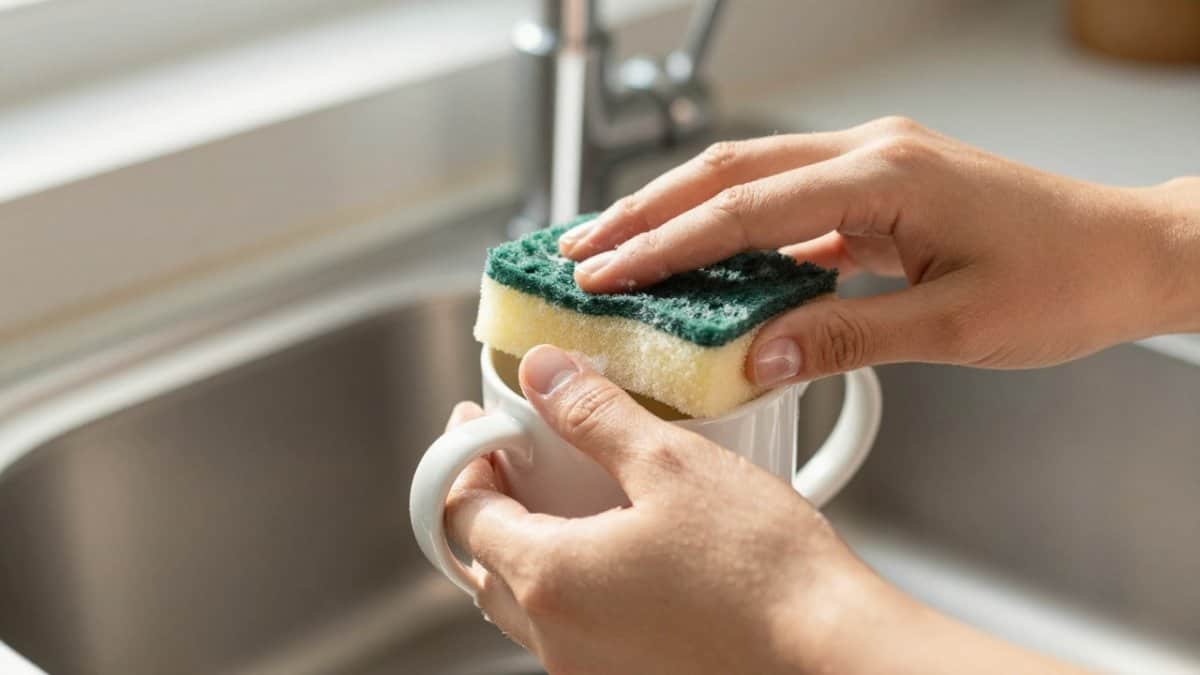
Work through this routine after every cup:
Watch out: leaving a mug to soak overnight in soapy water is not a substitute for washing. The soap breaks down, the water cools, and the tannins have hours to settle into the glaze.
Dishwasher use is fine for mugs labeled dishwasher-safe, but choose a gentle or energy-saving cycle and a detergent suited to your water. Check whether ceramic mugs are dishwasher safe before loading them. Harsh detergents and very hot dry cycles can dull glaze over time, and hard water leaves mineral film that makes tea residue cling. If your mugs come out of the dishwasher with a cloudy haze, that is usually mineral deposit rather than tea stain, and a vinegar soak will address it.
Hand-washing is generally the safer choice for decorated, hand-painted, metallic-trimmed, or vintage ceramic, since abrasives and harsh detergents can wear away decoration and trim.
A schedule only works if it distinguishes between routine upkeep and intervention. For more habits that protect ceramic over time, see practical tips for preventing mug chipping. Think of mug care in three tiers: daily maintenance, weekly refresh, and as-needed deep cleaning.
Daily (after every use): Rinse and wash with mild soap and warm water, then dry. This is non-negotiable for prevention. A mug that is rinsed and washed the same day rarely develops a set stain.
Weekly (or every few uses for heavy tea drinkers): Soak the mug in warm water with a spoonful of baking soda for 15 to 20 minutes, then wash as usual. This lifts the light film that daily washing leaves behind and keeps the glaze bright. If you drink several cups a day, do this twice a week.
Monthly (or as needed): Give mugs a deeper refresh with a baking soda paste on any area showing faint discoloration, and check the interior for haze. A monthly vinegar soak also helps in areas with hard water, since mineral film traps tea residue.
As needed (troubleshooting): Watch for these early warning signs and act before the stain sets:
Watch out: do not escalate straight to harsh abrasives or bleach when a stain first appears. Bleach can lighten stains but may leave residue in crazed glaze, and abrasive powders scratch the surface, which makes the next stain set faster. Start mild and only move up if the stain persists.
A simple rule of thumb: if you would not drink from it without washing, do not store it without washing.
Not every mug handles the same treatment. Glaze condition matters: a glossy, undamaged surface generally resists stains better than a worn or crazed one. Read the ceramic mug durability guide to see how mugs hold up to repeated washing and everyday wear.
If you use a dishwasher, check that the mug is labelled dishwasher-safe and choose a gentler cycle. Harsh detergents and hard water can leave a film that makes staining worse, so consider a detergent suited to your water.
Water quality plays a role too. Hard water can leave mineral deposits that trap tea residue, so regular cleaning is worthwhile in those areas.
Final Sip
A little attention each day keeps your white mugs looking their best. Rinse right away, wash gently, and tackle stains early with baking soda. Your favourite cup will stay bright, and your morning tea will taste even better when you’re not sipping from a stained rim.
Rinse the mug with warm water right after drinking, rather than letting tea sit. Wash it with mild soap and a soft sponge at the end of each day, and dry it fully. Avoid leaving tea in the mug overnight, since tannins bond to the glaze as the liquid dries. Using a lighter brew or shorter steeping time also reduces the tannin load that builds up over time, which makes regular cleaning far easier.
Yes, for light to moderate stains. Make a paste with baking soda and a little water, apply it with a soft cloth, and rub gently in circular motions. Rinse thoroughly afterward. Baking soda is a mild abrasive, so avoid heavy scrubbing on decorated or matte glazes, as it can dull the finish over time. For stubborn buildup, a short soak in warm water with a little white vinegar can loosen residue before you scrub.
It can. Tannins from tea begin binding to the glaze as the liquid sits and dries, and the residue becomes harder to lift the longer it stays. A mug left with tea overnight often needs more scrubbing the next morning than one rinsed right away. Rinsing immediately after use is the simplest way to keep staining under control.
Rinsing right after drinking helps a great deal because it removes tea before tannins have time to settle into the glaze. It will not replace a proper wash, though. Tea residue can still accumulate over several uses, so a daily wash with mild soap and a soft sponge is still recommended to keep white mugs bright.


