

Last Updated: October 9, 2026
Ceramic mug durability comes down to two things: the clay body and how the mug was fired and finished.
Most mugs look identical on a shelf yet have wildly different lifespans.
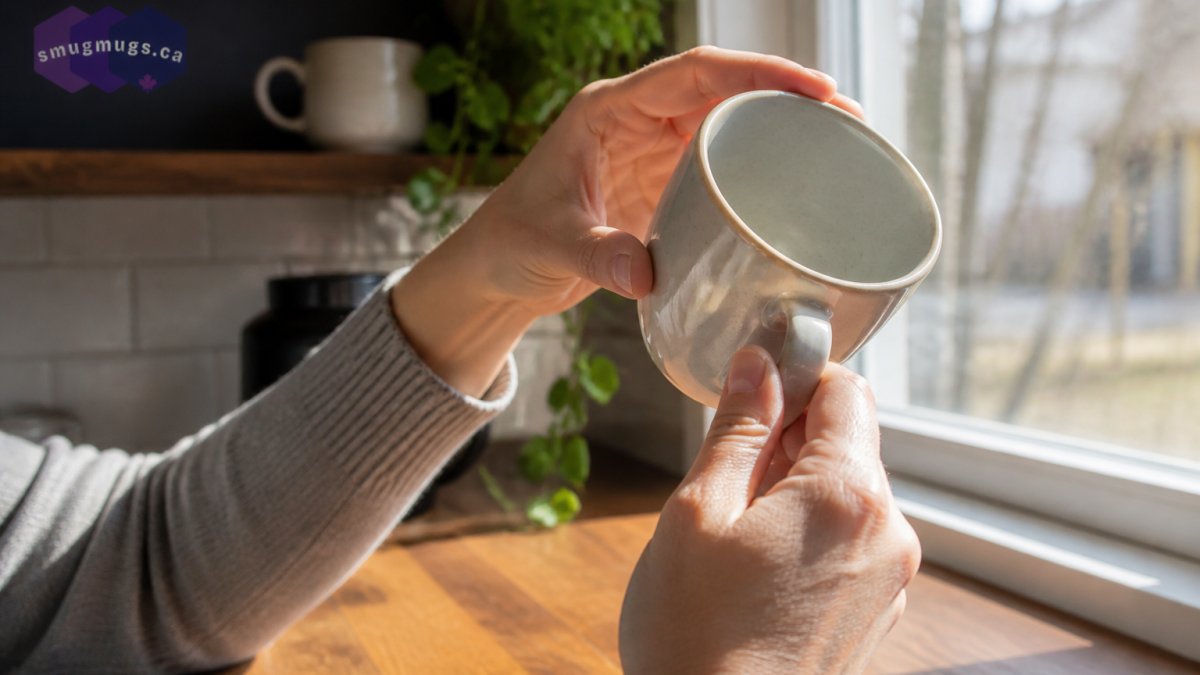
Porcelain is the most durable: fired at the highest temperatures, it fuses into a dense, non-porous body that resists chipping and staining best.
Stoneware sits in the middle: fired at moderate-to-high temperatures, sturdy and slightly heavier, with good resistance to everyday knocks. Most quality ceramic mugs, including ours, are stoneware.
Earthenware is the most fragile. Lower firing temperatures leave it porous and soft, so it chips easily and absorbs liquid if the glaze fails.
| Material | Firing Temperature | Durability | Best For |
|---|---|---|---|
| Porcelain | Highest | Excellent chip and stain resistance | Daily use, thin-walled mugs |
| Stoneware | Moderate-high | Good, sturdy, heavier feel | Everyday coffee and tea |
| Earthenware | Lowest | Fair, prone to chipping | Occasional or decorative use |
A well-made ceramic mug lasts five to ten years with daily use and proper care; a poorly made one can chip within months. The gap comes down to wall thickness, glaze quality, and how the handle is attached. Thin walls crack under thermal stress, cheap glazes develop crazing that lets liquid seep into the clay body, and poorly fused handles snap at the weakest point.
Choosing a quality ceramic mug comes down to three checks you can do in under a minute: inspect the glaze, tap the rim, and look at the handle join. The glaze should be smooth, evenly colored, and free of pinholes, tiny pits that expose the clay underneath, so run your fingertip around the rim and treat any roughness as a weak point.
A food-safe glaze contains no lead or cadmium and is fully vitrified, meaning it melted into a non-porous glass-like surface during firing.
In Canada, glazes and ceramic foodware fall under the Canada Consumer Product Safety Act, which prohibits the sale of products that pose a danger to health. Health Canada’s guidance on ceramic foodware and lead covers what to look for if you want to verify a product’s safety.
The tapping test is the fastest durability check available: a clear ring means the body is intact, a flat sound means walk away.
Chips, cracks, and crazing are the three main ways a ceramic mug fails, and each tells you why it happened and whether the mug is still safe to use.
A chip at the rim usually comes from impact, but it also signals a brittle body or thin rim edge.
A crack down the side points to thermal shock or internal stress from poor firing.
Pinholes are tiny pits from firing defects: harmless on a vitrified body, but on porous earthenware they expose raw clay and should be treated like a chip.
There is no reliable food-safe home repair for a cracked or chipped ceramic mug. Food-safe epoxy is not rated for hot liquid, repeated washing, or long-term food contact. For a decorative mug that never holds liquid, a cosmetic repair is fine; for anything you drink from, replacement is the safe answer.
Run a fingertip around the rim and down the interior wall, feeling for roughness, a lip, or a line. Hold the mug up to a light and look through the interior at an angle: hairline cracks and crazing show up as fine lines that catch the light. Tap the rim with your fingernail, a clear ring means the body is intact, a dull thud near a visible line means the structure is compromised.
Stainless steel lasts longer in raw terms: a steel travel mug survives drops that would shatter ceramic and will not chip or craze. But durability is not the only measure. Steel transfers heat fast, so it gets hot outside and cools your coffee quickly unless double-walled, while ceramic holds heat better and does not affect taste the way some metal vessels can.
| Feature | Ceramic | Stainless Steel | Ceramic-Lined Steel |
|---|---|---|---|
| Impact resistance | Low | High | High |
| Heat retention | Good | Varies | Good |
| Taste neutrality | Excellent | Good | Excellent |
| Dishwasher safe | Usually | Usually | Check label |
| Weight | Heavier | Lighter | Moderate |
Ceramic mug care and maintenance comes down to two goals: avoid thermal shock and protect the glaze. Most mugs fail early not from rough handling but from small, repeated stresses that add up.
Thermal shock is the most common cause of cracked mugs, and it is almost entirely preventable. When one part of a mug changes temperature faster than another, the two regions expand or contract at different rates, creating stress at the boundary; if that stress exceeds what the ceramic can absorb, a crack starts. The classic scenario is a mug straight from a cold cupboard into boiling water, the inner wall heats almost instantly while the outer wall is still cold, enough to crack a thin-walled or poorly fired mug on the spot.
Prevention is simple:
Hand-washing is safest: a soft sponge and warm water remove residue without dulling the glaze. If you use a dishwasher, place mugs on the top rack and skip heated drying. The dishwasher is harder on mugs than most people realize, abrasive, alkaline detergent attacks the glaze over hundreds of cycles, and high heat in the drying phase creates the same expansion mismatch as thermal shock at a slower rate.
Never use abrasive cleaners or steel wool on the interior, they scratch the glaze and create stain traps. For coffee and tea stains, a paste of baking soda and water lifts discoloration without scratching; soak a few minutes, then rinse. For heavier buildup, a diluted white vinegar soak works on mineral deposits.
Durability is not just about whether a mug survives; it is about how many years of daily use you get before replacement, and how much of that time the mug is safe to drink from.
When a mug reaches the end of its life, check whether it can be repurposed before discarding it. A cracked mug that no longer holds liquid can still work as a pen cup, a planter for a small succulent, or a holder for kitchen utensils.
The good ones quietly outlast everything else in your cupboard, they survive the dishwasher, the microwave, and the Monday morning rush, and still look the way they did on day one. But durability is not a given.
At SmugMugs.ca, we build mugs with personality and attitude, designed for the people who want their morning coffee to say something. Our ceramic vessels come in a range of designs for every mood, from sarcastic to sentimental, and they’re made for daily use, not shelf display.
Porcelain and high-fired stoneware generally outlast earthenware because they’re fired at higher temperatures, which fuses the clay body and glaze more completely. Look for a thick, even wall, a smooth rim with no pinholes, and a glaze that covers the entire interior. A mug that rings clear when you tap the rim usually has no hidden hairline cracks. Ceramic mug durability also depends on how you treat it: one thermal shock from a freezer-to-boiling-water swing can crack even a well-made mug.
With hand-washing and normal daily use, a well-made stoneware or porcelain mug can stay in rotation for several years. Earthenware tends to chip sooner because it’s fired at lower temperatures and stays more porous. The bigger variable is handling: mugs that get stacked in the dishwasher, knocked against the sink, or moved between extreme temperatures fail far earlier than mugs washed by hand and stored on a shelf or hook.
Ceramic mugs chip at the rim, crack from thermal shock, and can develop crazing, the fine web of surface cracks that lets liquid seep into the clay body. They’re also heavier than stainless steel and breakable if dropped. If a glaze contains lead or cadmium and isn’t food-safe, hot coffee can leach those metals over time, so buy from sellers who confirm food-safe, lead-free finishes. A chipped or crazed mug should be retired from drinking duty.
Three things: the clay body, the firing temperature, and the glaze. Porcelain and stoneware are fired hotter than earthenware, producing a denser, less porous body that resists staining and chipping. A thick, uniform wall and a well-formed handle reduce weak points. Glaze matters too: a smooth, fully covering glaze with no pinholes protects the clay underneath and is easier to clean, which means less scrubbing and fewer scratches over the mug’s life.
Most modern ceramic mugs are dishwasher and microwave safe, but check the maker’s label before assuming. Hand-washing is gentler: repeated dishwasher cycles and detergent wear down glaze over time, and mugs knocking together in the rack cause chips. In the microwave, avoid mugs with metallic trim or painted gold rims, since metal can spark. If a mug has crazing or a hairline crack, keep it out of both, because heat and moisture can worsen the damage.
Warm the mug with tap water before pouring boiling liquid into it, and never move a mug straight from the freezer to hot water. Wash by hand when you can, or use the top rack with enough spacing so mugs don’t clink. Store mugs on a shelf or hook rather than stacking them rim to rim. Check the rim every few months for small chips or hairline cracks, and stop using any mug once the glaze is compromised.
Tap the rim with a fingernail: a clear ring means the body is intact, while a dull thud can signal a hidden crack. Run a finger around the rim and handle for rough spots or uneven glaze. Look inside for pinholes, discoloration, or crazing. Check that the base sits flat without wobbling and that the handle feels balanced when the mug is full. A mug that passes all of these checks is usually worth keeping for years.


