

Last Updated: November 9, 2026
Quick Summary
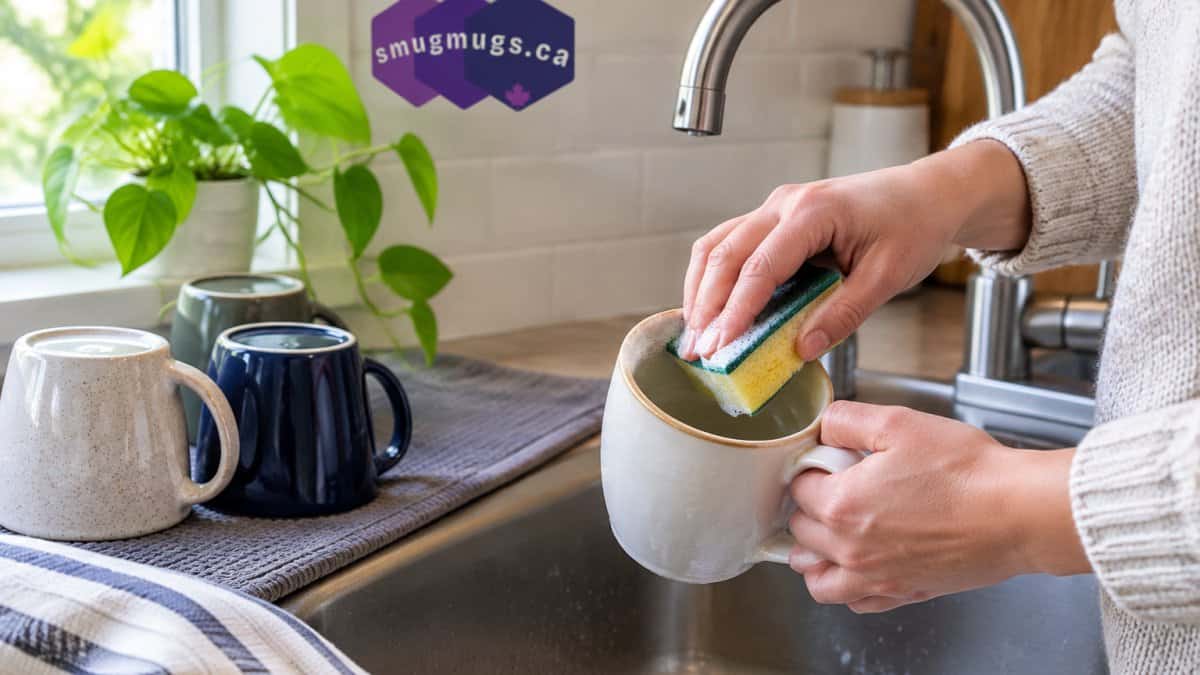
To clean ceramic mugs properly, wash them by hand right after use with warm water, a drop of mild dish soap, and a soft non-abrasive sponge. Rinse within 30 minutes, then dry upside down on a rack so water doesn’t pool in the base. Avoid steel wool, scouring pads, and melamine foam, which wear down the glaze.
Learning how to clean ceramic mugs properly starts with one simple habit: wash your clean ceramic mugs by hand, right after use. That five-minute routine is the single best way to protect the glaze and keep printed designs sharp. A lazy rinse can quickly turn into a stained, cloudy mug.
Hot water, a drop of mild dish soap, and a soft sponge handle almost everything. Skip the sink pile-up. Coffee and tea left to dry form a film that bonds to the glaze.
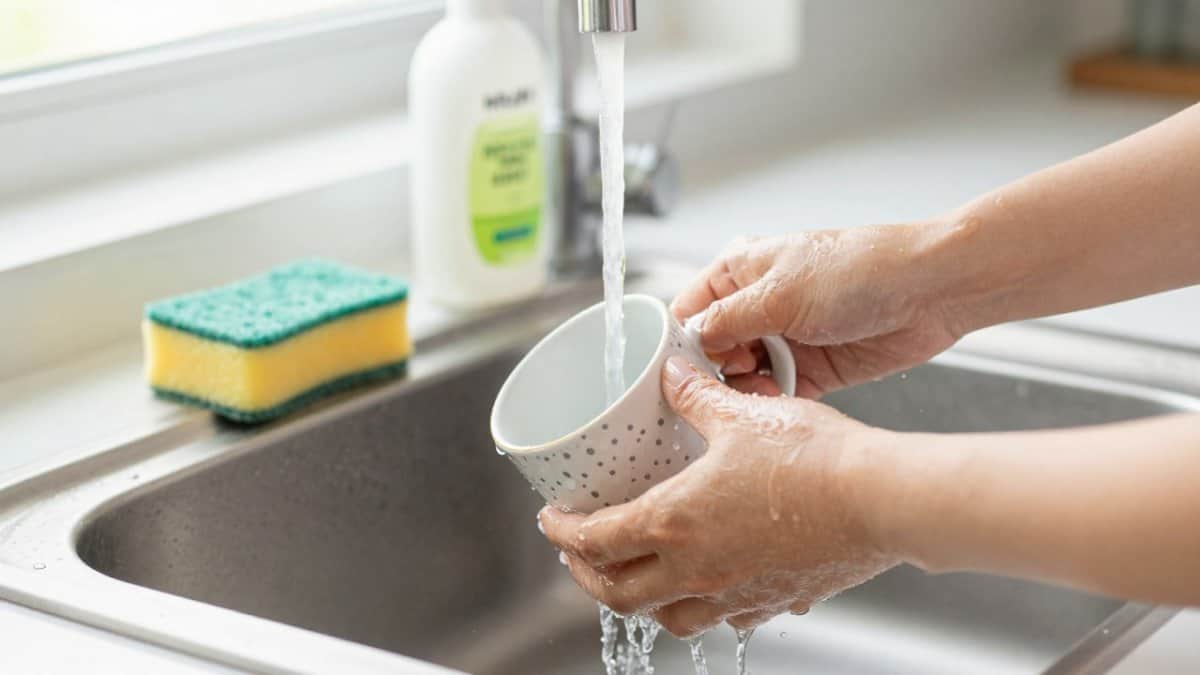
The ceramic glaze is a thin glass-like coating. It keeps liquid out and color in. Scratch it, and stains get a place to hide.
Here’s the routine we recommend:
Watch out: never dunk a cold mug straight into boiling water. Sudden heat shock can crack it. Let the mug warm up first.
A paste of baking soda and water is a common way to tackle coffee stains. Coffee tannins can cling to tiny pores in the glaze, and a mild alkali can help lift them without heavy scrubbing.
Try this:
For a deeper clean, fill the mug with warm water and a spoon of baking soda, then soak for an hour. For a full walkthrough, see our guide on how to remove coffee stains easily.
Tea stains come off with white vinegar or a little kosher salt. Black tea leaves a brown ring that plain soap won’t touch.
Two methods that work:
If you drink tea every morning, a mug that holds up to daily washing matters. Our roundup of the best ceramic mugs for morning tea covers tested picks worth a look.
Cleaning ceramic mugs with baking soda is the safest deep clean for glazed surfaces. It lifts residue buildup without the grit that scratches.
Use it for:
Mix a thick paste, apply, wait, and rinse. For stubborn spots, a splash of white vinegar can be added.
Don’t leave baking soda paste on for days. A long soak won’t hurt the glaze, but it’s unnecessary.
Most ceramic mugs are dishwasher safe, but the rinse cycle and harsh detergent wear down glaze and printed designs over time. Check the base of your mug first.
Here’s the quick guide:
| Mug Type | Dishwasher Safe? | Best Approach |
|---|---|---|
| Plain glazed porcelain | Usually yes | Top rack, low heat |
| Stoneware with prints | Often no | Hand wash |
| Travel mug with lid | Rarely | Hand wash, clean gasket separately |
| Vintage or crazed mug | No | Hand wash only |
Hand washing is always the safer bet for anything with a design you love. For the full breakdown, read our guide on whether ceramic mugs are dishwasher safe.
Glaze is a thin, glass-like layer fired onto the clay body. It’s hard, but it’s not invincible. Abrasive tools can wear it down over time, and the shine can dull as stains find places to settle.
Some abrasives are obvious: steel wool, scouring pads, and gritty cleansers. Others feel soft but act like fine sandpaper. Melamine foam sponges, sold under brand names like Magic Eraser, are a common example. They work by micro-abrasion, which is fine on a porcelain sink but too aggressive for a printed mug. Keep them away from any mug with a design you want to keep.
Watch out: “non-scratch” on a sponge label refers to the sponge, not your glaze. A scrubber can be gentle on a nonstick pan and still dull a ceramic mug over repeated use.
Not all ceramic is the same, and the right tool depends on what you’re holding:
Stick to soft sponges, soft-bristle brushes, and cloth. For stuck-on residue, let a baking soda paste or a vinegar soak do the work instead of scrubbing harder. Your mug’s surface integrity depends on it.
For more ways to avoid wear, our guide on preventing mug chipping has ten practical tips.
Two problems hide in plain sight on ceramic mugs: mineral film from hard water, and crazing, the fine web of cracks that develops in older glaze. Neither shows up in a quick rinse, and both change how you should clean.
Hard water carries dissolved calcium and magnesium (Median surface water hardnesses). When that water evaporates from a mug, it leaves those minerals behind as a chalky film. On its own, the film wipes away with a vinegar soak. The trouble starts when it mixes with coffee tannins and tea polyphenols: the minerals bind to the organic compounds and bake into a stubborn brown-gray layer that plain soap won’t lift.
Mugs in hard-water households can stain faster and look duller even after washing. If you see a white haze on the inside of a mug that’s been air-dried, that’s the mineral film starting.
To clear it:
A periodic vinegar soak can help keep mineral film from bonding with tannins. If your water is very hard, drying mugs with a clean cloth instead of air-drying reduces the spotting that leads to buildup.
Crazing is the network of hairline cracks that appears in glaze over years of heating, cooling, and dishwasher cycles. The cracks are in the glassy layer, not the clay body, and they can trap liquid and coffee oils.
Watch out: a crazed mug can look clean and still harbor residue in the crack network. If you run a fingernail across the surface and feel ridges, or see a web pattern when you hold the mug to the light, it’s crazed.
What to do:
Prevention is simpler than rescue. Avoid sudden temperature swings, such as pouring boiling water into a cold mug. Hand washing when you can is a gentler option. Store mugs without stacking them rim to rim, since rim contact is where chips and cracks often begin.
If you want to spot good glaze before you buy, our guide on how to spot quality ceramic mugs explains what to check.
A mug you love deserves five minutes of care, not a trip through the dishwasher on high heat. Rinse it, wash it gently, and it will keep its shine and its design for years.
SmugMugs.ca offers ceramic mugs in designs for every mood, from sarcastic to sentimental. Browse the collection, find one that fits your personality, and give it the simple care it deserves.
Ready to drink from a mug that says something? Get started with SmugMugs.ca and find a ceramic mug that matches your mood, your humor, and your daily brew.
Skip steel wool, scouring pads, and anything labeled abrasive. Use a soft non-abrasive sponge or a nylon bristle brush, warm water, and a drop of mild dish soap. For stuck-on residue, soak the mug in warm water for 10 to 15 minutes first so the debris loosens on its own. Scrubbing dry or with grit only wears down the glaze over time, which is what makes mugs look dull and stained.
Yes. Baking soda is a mild abrasive that lifts coffee tannins and tea residue without the harshness of stronger cleaners. Make a paste with three parts baking soda to one part water, apply it to stained areas, let it sit for 15 to 20 minutes, then rinse and wash as usual. For a deeper clean, soak the mug overnight in warm water with a few tablespoons of baking soda dissolved in it.
Many are, but check the base of the mug first. Glazed ceramic and porcelain usually handle the dishwasher fine, while stoneware with metallic trim, hand-painted details, or printed designs can fade or crack over repeated cycles. If you want your printed mug to keep its design sharp for years, hand washing is the safer bet. Always place mugs on the top rack and avoid the heated drying cycle when in doubt.
Wash it after every use, even if it only held hot water. Oils from coffee and tea build up invisibly and turn into stubborn stains over weeks. A quick rinse and hand wash takes under a minute. Once a month, give your daily mug a deeper soak with baking soda or a white vinegar solution to clear out residue in the bottom and along the rim where tannins collect.


