

Last Updated: October 12, 2026
The safest way to know whether ceramic mugs dishwasher safe are is to check the manufacturer’s label first. But not all mugs come with clear instructions, and even when they do, understanding what makes a ceramic mug safe in the dishwasher requires knowing a bit about the material itself.
At SmugMugs.ca, we get asked this question often. People love their mugs, whether they’re funny, sentimental, or just perfectly suited to their personality, and they want to keep them looking great. The good news: most everyday ceramic mugs can handle the dishwasher. The catch: some can’t.
Look for a dishwasher-safe symbol on the bottom of your mug. It usually looks like a plate or bowl with water droplets or lines beneath it. If you see this symbol, the manufacturer has tested the mug and confirmed it’s safe for machine washing.
No symbol? Check for written instructions. Many mugs have text printed or stamped on the base. Look for phrases like “dishwasher safe,” “top rack only,” or “hand wash recommended.”
A worn-away stamp or a bare base doesn’t automatically mean hand wash only, but it does mean you need to make a judgment call. Work through these questions in order:
If you’re still unsure after working through those questions, wash it by hand. The cost of hand washing one mug is a few seconds; the cost of ruining a favorite mug is permanent.
Not all ceramic is created equal. The body of the mug, the clay itself, matters. So does the glaze that coats it. A well-fired ceramic body with a strong glaze can withstand repeated dishwasher cycles. A poorly fired or porous ceramic body, or a thin or damaged glaze, cannot.
Here’s what to look for:
Ceramic is a broad category. Understanding the differences between ceramic types helps you predict how a mug will hold up.
Porcelain is the most durable option. It’s fired at very high temperatures, creating a non-porous, glass-like surface.
Stoneware sits in the middle. It’s fired at moderate temperatures and has a slightly porous body.
Earthenware is the most fragile. It’s fired at the lowest temperature and is quite porous. Most earthenware mugs should be hand washed.
Handmade ceramic mugs often fall into the stoneware or earthenware category. They’re beautiful and unique, but they need gentler care.
The glaze is what makes a ceramic mug waterproof and food-safe. It’s also the first thing to suffer in the dishwasher.
A thick, well-applied glaze can take repeated heat and water pressure. A thin glaze or one applied unevenly will deteriorate faster.
The glaze also protects the clay body underneath. If the glaze cracks or wears away, water can seep into the porous clay.
Health Canada’s guidance on food-contact ceramics notes that glazes must be properly formulated and fired to ensure safety.
This is where many people run into trouble. A mug might have a dishwasher-safe ceramic body and glaze, but the decoration on top can fail.
Metallic trim and gold luster are applied on top of the glaze. They look beautiful, but they’re vulnerable.
On-glaze decals are printed designs applied to the surface after the main glaze is fired. They’re not as durable as the base glaze. Repeated dishwasher cycles fade these designs.
Many mugs with printed artwork or hand-painted designs fall into this category. The decoration is applied on top, not fused into the glaze itself.
If your mug has a printed design, whether it’s a funny phrase, a custom logo, or a photo transfer, the dishwasher is its enemy. Heat and water pressure break down the ink or transfer material.
Check the bottom of the mug. If you see a note like “design may fade with repeated washing,” the manufacturer is telling you the decoration won’t last. Hand wash to preserve the design.
If you want to use the dishwasher but protect your mug’s appearance, follow these guidelines.
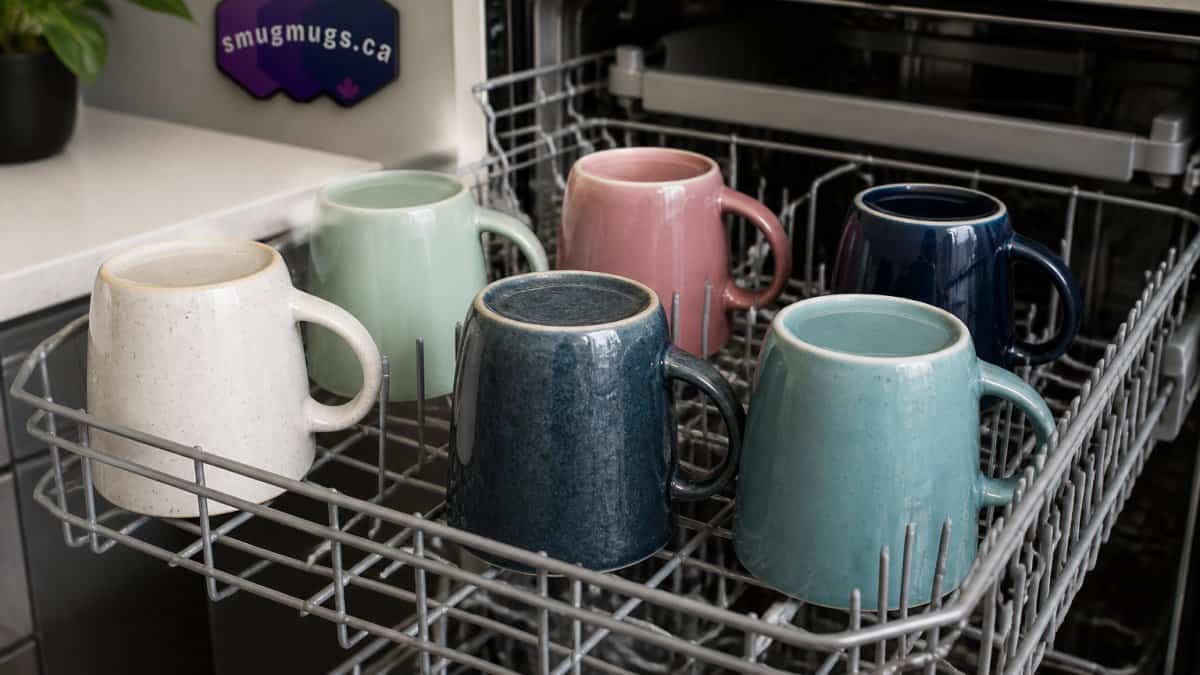
Load on the top rack only. The top rack is cooler and has lower water pressure than the bottom.
Space mugs apart. Don’t crowd them.
Place mugs upright. Never stack them or lay them on their side.
Use a gentle or eco cycle. These settings use lower temperatures and less aggressive water pressure. Skip the heat-dry option.
Use mild detergent. Harsh dishwasher detergents are harder on glazes and decorations. Choose a gentler formula.
Hand washing is the safest option for any mug you care about. It takes two minutes and extends the life of your mug significantly.
Use warm (not hot) water and mild dish soap. A soft sponge or cloth is all you need.
Rinse thoroughly and dry with a soft towel. This prevents water spots and mineral deposits from building up over time.
For stubborn stains inside the mug, fill it with warm water and a bit of baking soda.
Handmade ceramic mugs deserve extra attention. They’re often made with love and craftsmanship, and they’re frequently one-of-a-kind pieces.
Most handmade pottery is not dishwasher safe. The firing process is less controlled than mass production, and the glaze may not be as durable.
Check with the maker if possible. Many artisans include care instructions with their work. If you bought a handmade mug without guidance, assume hand wash only.
Store handmade mugs carefully. Stack them with soft cloth between each one to prevent chipping.
Even if you follow all the guidelines, mugs can show wear over time. Knowing what to watch for helps you catch problems early, and helps you tell the difference between a mug that’s merely aging and one that’s no longer safe to drink from.
Not every change means the mug is finished. Here’s how to sort the harmless from the serious:
Crazing appears as a fine network of cracks in the glaze, like a spiderweb. It’s usually cosmetic at first, but it’s also the earliest warning sign. A crazed glaze is no longer a continuous barrier, so water and detergent can work their way into the clay body underneath. A lightly crazed mug is still usable, but it won’t last as long, and it should not go back in the dishwasher.
Dull or faded finish means the glaze is wearing away. This happens gradually with repeated washing.
Faded or blurred decoration is a design problem, not a safety problem. The mug is still fine to drink from; it just no longer looks the way it did.
Discoloration or staining that won’t come out after a normal wash suggests the glaze is no longer waterproof. Water is seeping into the clay body and staining it from within.
Dishwasher safety and food safety are two different questions. A mug can be perfectly dishwasher safe and still be unsafe to drink from. Retire a mug, from the dishwasher and from daily use, if you see any of the following:
Health Canada’s guidance on food-contact ceramics notes that glazes must be properly formulated and fired to ensure safety. A properly fired, intact glaze is what keeps the clay body sealed off from your drink.
If your mug shows any of the serious signs above, consider retiring it from regular use. A mug you love is worth replacing before it becomes a mug you can’t safely use.
The answer to whether ceramic mugs dishwasher safe are depends on three things: the ceramic body, the glaze, and the decoration. Most everyday ceramic mugs, the kind you’ll find at SmugMugs.ca, can handle occasional machine washing on the top rack with a gentle cycle.
The time you spend hand washing a mug you love is time well spent. It’s a small ritual that keeps your favorite designs vibrant and your ceramic intact.
Check the bottom or inside rim for a dishwasher-safe symbol or care instructions from the maker. If no label exists, examine the mug carefully: high-quality fired ceramic with a smooth, robust glaze and no decorative metallic trim is usually safe. Handmade ceramics and mugs with delicate on-glaze decals or gold luster finishes are best handwashed. When unsure, handwashing protects both the mug and its design.
Most handmade ceramic mugs can withstand dishwasher heat and water pressure if the glaze is properly fired and there are no special finishes. However, handmade pottery often features unique or fragile decorative elements, hand-painted details, metallic accents, or delicate surface work, that may fade or chip in the dishwasher. Check with the maker for care recommendations, or play it safe with handwashing to preserve the artistry and durability of your handmade piece.
Ceramic mugs fail in dishwashers for several reasons: poorly fired clay that absorbs water and becomes porous, low-quality glaze that crazes or flakes under thermal shock, metallic trim or gold luster that strips away with detergent and heat, and fragile decorative elements like on-glaze decals or hand-painted designs that fade or crack. Earthenware is especially vulnerable because it is more porous than stoneware or porcelain. Handwashing these mugs extends their life and keeps designs intact.
Inspect the mug for signs of quality: smooth, glossy glaze without cracks or rough patches, no metallic accents, and simple printed or under-glaze designs. Test handwashing first to see how the design and glaze respond. If the mug feels sturdy and the glaze is thick and even, try the top rack of a gentle cycle. If you notice color fading, glaze damage, or chips after one wash, switch to handwashing permanently. When in doubt, handwashing is always the safer choice for long-term durability.


