
Last Updated: October 20, 2026
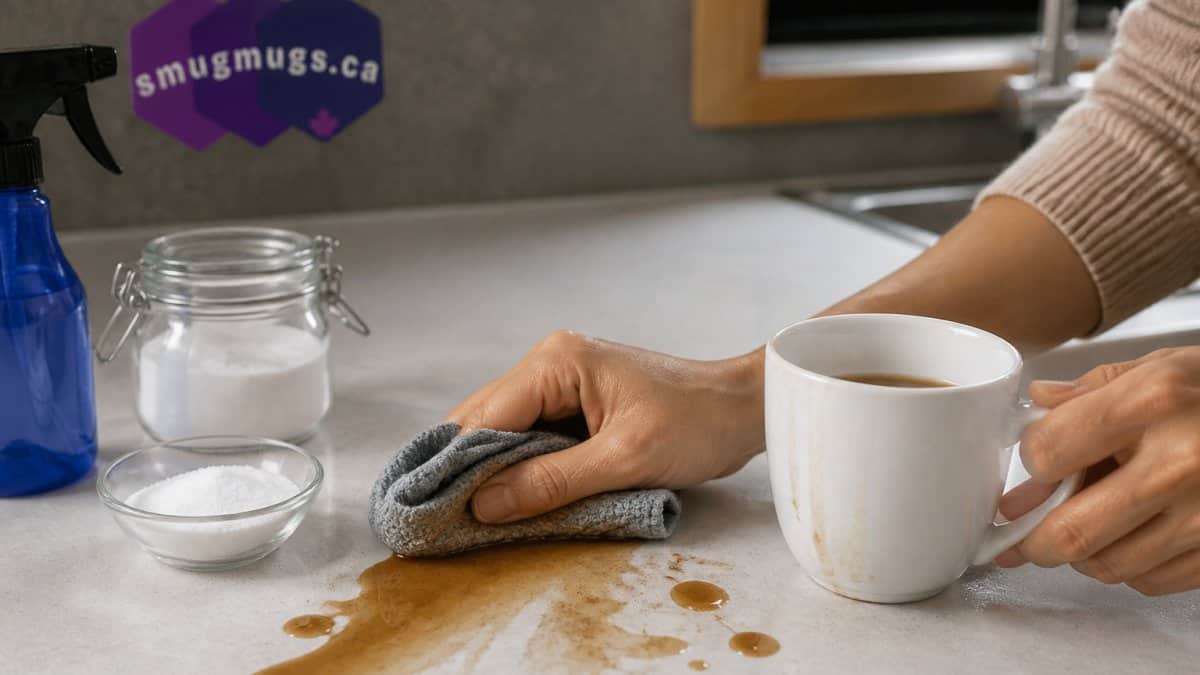
Cold water is the single most important tool for removing a coffee stain.
Here’s the good news: most fresh coffee stains come out completely if you act fast. The trick is knowing what to reach for first.
One thing most guides get wrong: they tell you to scrub. Scrubbing pushes coffee deeper into the fibers. Blotting lifts it out. That single difference decides whether your shirt survives.
The best approach for clothing is to blot the fresh spill, rinse from the back with cold water, then treat with a mild soap solution before washing. Act within the first few minutes for the best result.
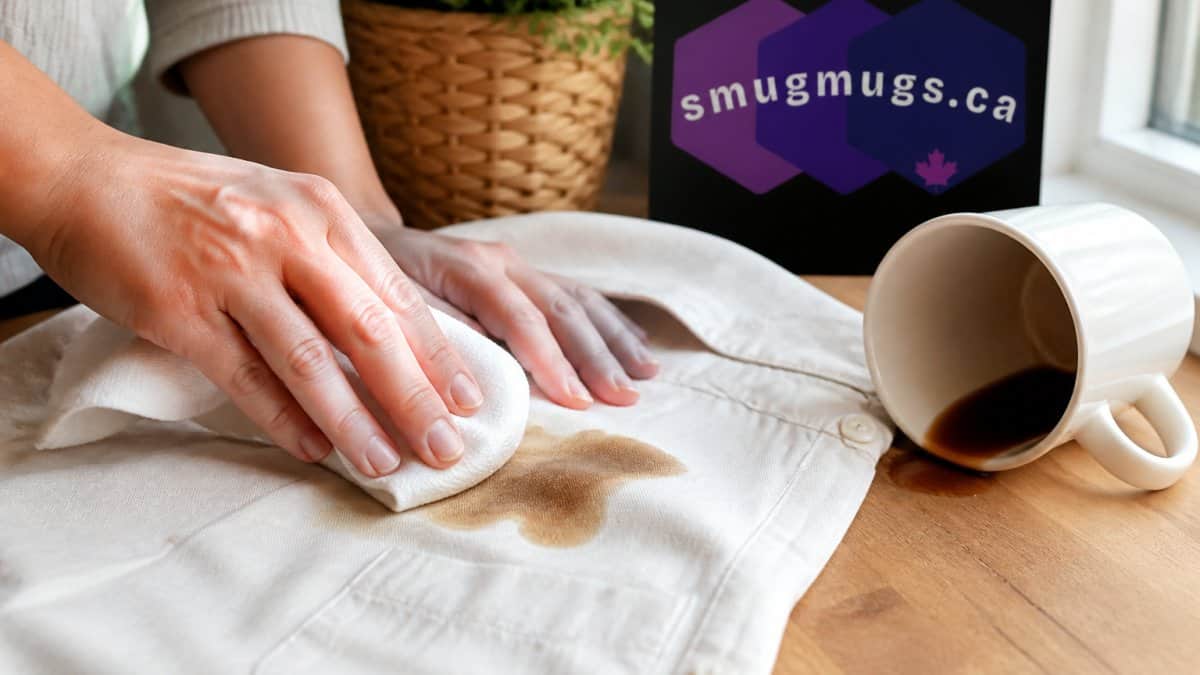
Blotting is the correct move for a fresh spill. Press a clean cloth or dry towel onto the stain and let it soak up the excess coffee. Work gently and swap to a clean section of the towel as it absorbs.
Rubbing spreads the stain and damages fabric fibers. Gentle pressure is all you need.
A simple soap solution handles most fresh stains. Mix a few drops of dishwashing detergent with cold water and dab it onto the stain. Let it sit for a few minutes, then rinse thoroughly.
For tougher marks, a water and vinegar mix works well. White vinegar helps break down coffee residue without harsh chemicals. Test any solution on a hidden seam first, especially on synthetic fabric or dark colors.
| Solution | Best For | How to Apply |
|---|---|---|
| Dishwashing detergent | Fresh stains on cotton | Dab, wait 5 minutes, rinse |
| White vinegar and water | Set-in marks and odors | Soak 15 minutes, rinse |
| Enzyme detergent | Milk or cream stains | Pretreat before washing |
| Laundry detergent | General wash cycle | Apply directly, then launder |
A dried coffee stain is not the same problem as a fresh spill. Once the water evaporates, the tannins and plant compounds in coffee bind more tightly to the fibers, and any heat the garment has already seen, from a dryer, an iron, or even a hot wash, can lock that color in further.
The good news: most set-in coffee stains are still removable. The key is to rehydrate the stain before you try to lift it, and to check your work before heat ever touches the fabric again.
Fresh coffee sits mostly on the surface of the fibers, so blotting and a quick rinse can carry most of it away. A dried stain has had time to settle into the weave, and the compounds responsible for the brown color have had time to bond. Rubbing a dried stain dry only drives those compounds deeper and can abrade the fabric.
If a stain has already been through the dryer or been ironed, the color may be bonded more firmly. Do not give up, but adjust expectations: heat-set stains often need two or three treatment cycles rather than one. Repeat the presoak-and-wash sequence, and consider an oxygen-based color-safe bleach for washable fabrics, check the care label and patch-test first. For delicate or non-washable items, a professional cleaner is the safer route.
Some stains are best left to a professional: dry-clean-only garments, wool and silk, upholstery that cannot be removed, and any stain that has survived several treatment cycles. Tell the cleaner what caused the stain and whether the coffee contained milk, cream, or sweeteners, so they can choose the right solvent.
Dish soap does remove coffee stains, and it’s often the best first choice for fresh spills.
Why does it work? Dish soap is built to break down oils and food residue, and coffee is basically a water-based stain with plant compounds that cling to fibers.
What dish soap won’t fix: an old, heat-set stain, or a delicate fabric that can’t handle any scrubbing.
Getting coffee out of carpet means blotting up the excess fast, then treating with a mild soap solution and rinsing with cold water.
Start by pressing a dry towel into the spill to pull up as much coffee as possible.
For a dried carpet stain, a water and vinegar solution helps loosen the coffee residue. Spray lightly, wait a few minutes, and blot with a clean cloth.
Removing coffee stains from ceramic mugs is easy: a paste of baking soda and water lifts the brown film that builds up inside.
Ceramic is non-porous, so stains sit on the surface rather than soaking in. That makes them simple to remove.
White vinegar works too. Soak the mug for a few minutes and the residue loosens.
At SmugMugs.ca, our mugs are made for daily use, so a quick wash keeps the design and glaze looking sharp.
Delicate and non-washable fabrics need a gentler approach than cotton or synthetics. Blot the excess, then dab with a mild soap solution and rinse with a damp cloth. Skip the washing machine and never scrub.
Coffee with milk, cream, or sugar is a different problem. The added proteins and sugars feed bacteria and can leave a sour smell if not fully removed.
| Material | Fresh stain | Dried stain | Watch out for |
|---|---|---|---|
| Cotton and linen | Blot, rinse from the back with cold water, then dish soap solution | Presoak in cold water with enzyme detergent, then wash | Hot water and dryer heat set the stain |
| Synthetics (polyester, nylon) | Blot, dab with mild soap, rinse | Presoak briefly, then treat with stain remover | Some solvents can affect finishes, patch-test first |
| Wool and silk | Blot only; dab with mild soap; do not rub | Take to a professional cleaner | Agitation causes felting and shine |
| Upholstery | Blot, dab with mild soap, rinse with damp cloth | Light vinegar solution, blot, repeat | Over-wetting can reach padding and cause mildew |
| Dry-clean-only garments | Blot what you can, then take to a professional | Professional cleaning | Home washing can shrink or distort the garment |
Before any solution touches a visible area, patch-test it on an inside seam, hem, or other hidden spot. Apply a small amount, wait a few minutes, and check for color change, bleeding, or damage to the finish.
Also check the care label before you start. Never mix cleaning products, combining bleach with vinegar or ammonia, for example, can produce dangerous fumes (Reduce your risk from toxic gases: Never mix bleach with other cleaning products).
Dairy and sugar change the chemistry of the stain. Proteins and sugars can support bacterial growth, which is why an incompletely removed milk-based stain may develop a sour smell later. Enzyme detergents are formulated to break down proteins and starches, so they are the better choice for these stains than plain dish soap.
Do not reach for the dryer. Re-treat the stain with the same sequence, presoak, enzyme detergent, gentle agitation, rinse, and check again. Most stains that survive one wash will lift on a second or third treatment. If a stain has survived several cycles, or the garment is delicate or non-washable, a professional cleaner is the safer next step.
A coffee stain is a small panic that’s almost always fixable. Cold water, a clean cloth, and a little patience handle most spills before they set.
If your daily brew deserves a better vessel, that’s where we come in. SmugMugs.ca offers ceramic mugs with personality, from sarcastic to sentimental, so your morning coffee says something about you. Browse our collection and find the mug that fits your mood.
Yes. Dried coffee stains are harder to lift than fresh spills, but they usually come out with patience. Presoak the stained fabric in a mix of cold water and a few drops of dish soap for at least 30 minutes, then work in a small amount of enzyme laundry detergent and wash on the warmest cycle the care label allows. Check the stain before drying, because heat from a dryer can set any residue permanently.
Start with cold water. Cold water keeps the coffee from spreading deeper into the fibers and stops the stain from setting. Once the stain has been pretreated and you are ready to launder the item, you can move to the warmest safe water temperature listed on the care label. Never pour hot water directly onto a fresh coffee stain, as it can push the color further into the fabric.
Dish soap helps, especially on fresh stains and on carpet. Apply a small amount of clear, gentle dish soap mixed with cold water, blot gently, and rinse thoroughly with a clean damp towel. It works best as a first step before treating with vinegar or an enzyme detergent. For older, set-in stains, dish soap alone may not be enough, so pair it with a presoak and a proper wash cycle.
For everyday coffee residue, wash the mug with warm water and dish soap, then rinse. For stubborn brown staining inside the mug, fill it with warm water and add a spoonful of baking soda or a splash of white vinegar, let it sit for 15 to 30 minutes, then scrub gently with a non-abrasive sponge. Avoid abrasive scouring pads on printed or glazed designs, as they can dull the finish over time.
A stained shirt is forgettable. A mug that makes your coworkers laugh is not. At SmugMugs.ca, we make ceramic mugs with attitude, built for daily use and designed to express your mood. Our Canadian-based shop carries a wide range of designs for every personality and occasion. Get started with SmugMugs.ca and give your coffee routine some character.


