


Last Updated: November 12, 2026
Quick Summary
The best way to clean stained ceramic mugs naturally is to scrub them with a baking soda paste, which lifts coffee stains without harsh chemicals. For older tea stains, soak the mug in equal parts white vinegar and warm water for at least 30 minutes, then rinse well.
Clean stained ceramic mugs are one of those small household frustrations that build up over time, though they are easier to fix than most people expect. Coffee and tea leave behind brownish tannin marks that seem to set in a little more with every cup. The good news is that you can usually remove them using ingredients already in your kitchen, without harsh chemicals.
Ceramic has a glazed surface, but the glaze is not always perfectly smooth. Our guide on why ceramic mugs hold heat better explains how the material affects surface behavior. Tiny pores and rough spots can trap tannins, the natural compounds in coffee and tea that cause brown staining. Over time, those compounds build up in the grooves and near the rim.
Hot liquids speed up the process. Heat can help tannins bond to the surface, so a mug that sits with leftover coffee overnight can stain faster. Scratches in the glaze also catch residue, which is why stains can look worse on an older mug. Knowing this helps you pick the right cleaning method and avoid damaging the finish.
Baking soda is a gentle, mildly abrasive powder that lifts stains without scratching most glazed ceramic. For more detail, see a complete guide to removing coffee stains easily. It is the best place to start when you want clean stained ceramic mugs without harsh chemicals.
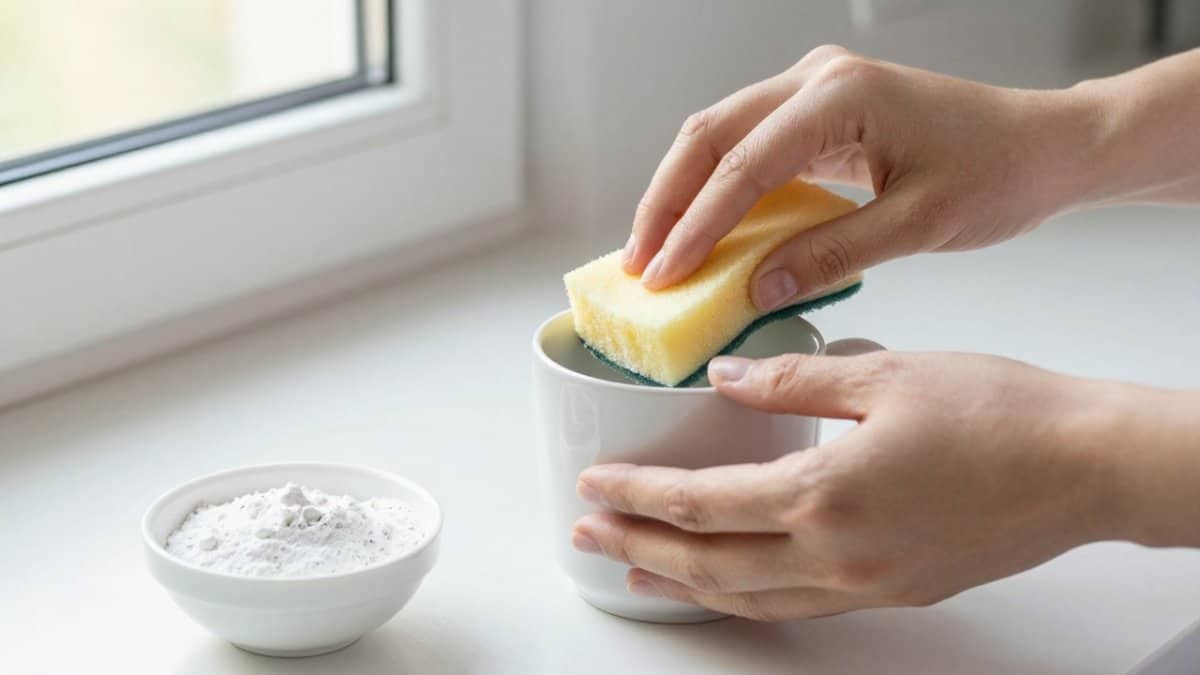
Tip: Work the paste into the bottom and the rim, where stains tend to collect most.
Tea stains often look darker and more stubborn than coffee stains. For older buildup, a vinegar soak works well.
Vinegar is acidic, so keep soaks to what you need. Avoid leaving it on mugs with decorative metallic trim for long periods.
Not every mug needs a strong treatment. For light, recent marks, a few simple options can help:
Start with the mildest method. You can always move up to a stronger one if the stain stays.
Not all ceramic is the same, and the safest cleaning method depends on what kind of surface you are dealing with. You can learn how to clean ceramic mugs properly without ruining the glaze. Treating a hand-painted mug like a plain glazed diner mug is how decoration gets dulled or a porous clay body gets waterlogged.
If you are unsure which type you have, check the base of the mug for a maker’s mark or care label. When there is no label, assume the finish is delicate and start with the gentlest option.
Watch out: A mug with visible crazing (fine web-like cracks in the glaze) or a chipped rim should not be soaked or scrubbed aggressively, because liquid can get under the glaze and the surface is already compromised.
Check the care label before using the dishwasher. Our practical guide to whether ceramic mugs are dishwasher safe explains what to look for. Repeated cycles and harsh detergents can dull decoration over time. Hand washing is the gentler choice for anything hand-painted or metallic-trimmed.
Prevention is easier than removal, but the habits that matter most depend on your water. In areas with hard water, mineral deposits from calcium and magnesium settle on the glaze and create a rough, chalky layer that tannins cling to. That is why some mugs stain faster even when they are washed regularly.
If your mugs feel slightly rough or show a white haze even when clean, mineral buildup is likely the cause. A short soak in equal parts white vinegar and warm water, followed by a rinse and a wash with dish soap, dissolves that film and leaves a smoother surface that resists staining. Do this once every few weeks rather than waiting for stains to appear. A common pattern is that mugs in hard-water homes need this descaling step more often than the mugs themselves seem to require cleaning.
A quick baking soda rinse once a week keeps light stains from building into dark ones. For mugs used daily, this small habit is more effective than occasional deep cleaning, because it removes fresh tannin residue before it has a chance to set into the glaze.
A clean mug makes every cup taste better.
Here is a quick reference for the main cleaning options covered in this guide.
| Method | Best for | Key difference |
|---|---|---|
| Baking soda paste | Coffee stains on glazed mugs | Mildly abrasive, gentle on glaze |
| Vinegar soak | Tea stains and older buildup | Soak at least 30 minutes, or overnight |
| Lemon wedge | Light, recent marks | Rub, rest a few minutes, rinse |
| Denture cleaning tablet | Hands-free soaking | Soak 5 to 10 minutes in hot water |
| Dish soap and hot water | Fresh residue | Use before trying stronger methods |
Pick your most stained mug and try the baking soda paste first. It takes only a few minutes and uses supplies you likely already have. If your mug still needs help, the vinegar soak is a strong next step.
Ready to replace a tired mug with one that has real personality? Browse the full collection at SmugMugs.ca and find a design that says exactly how you feel before your first sip.
Final Sip
A stained mug does not have to stay that way. With a little baking soda, a patient soak and a gentle hand, most marks lift away and your favourite cup is ready for its next cup of coffee.
For most everyday coffee stains, a baking soda paste works well. Mix baking soda with a little water until it forms a thick paste, spread it over the stained areas, and scrub gently with a damp sponge or soft cloth. Rinse thoroughly with warm water. Older, darker buildup often responds better to a longer soak in diluted white vinegar, which you can leave in the mug overnight before rinsing and washing as usual.
Yes, baking soda is a mild abrasive that lifts the tannins responsible for most tea and coffee staining when used as a paste. It works best on recent or moderate stains. For heavier discoloration, pair the paste with a short soak. Always rinse well afterward so no gritty residue stays on the surface, and wash the mug with dish soap and hot water before using it again.
Avoid steel wool, harsh scouring pads and abrasive powders with large particles, since these can dull the glaze. Use a soft sponge or cloth with a baking soda paste, scrubbing in gentle circular motions. Soaking in vinegar or a dissolving cleaning tablet lets the solution do most of the work, so you need less scrubbing. Test any method on a small area first if the mug has a metallic or decorated finish.


