

Last Updated: November 7, 2026
Quick Summary
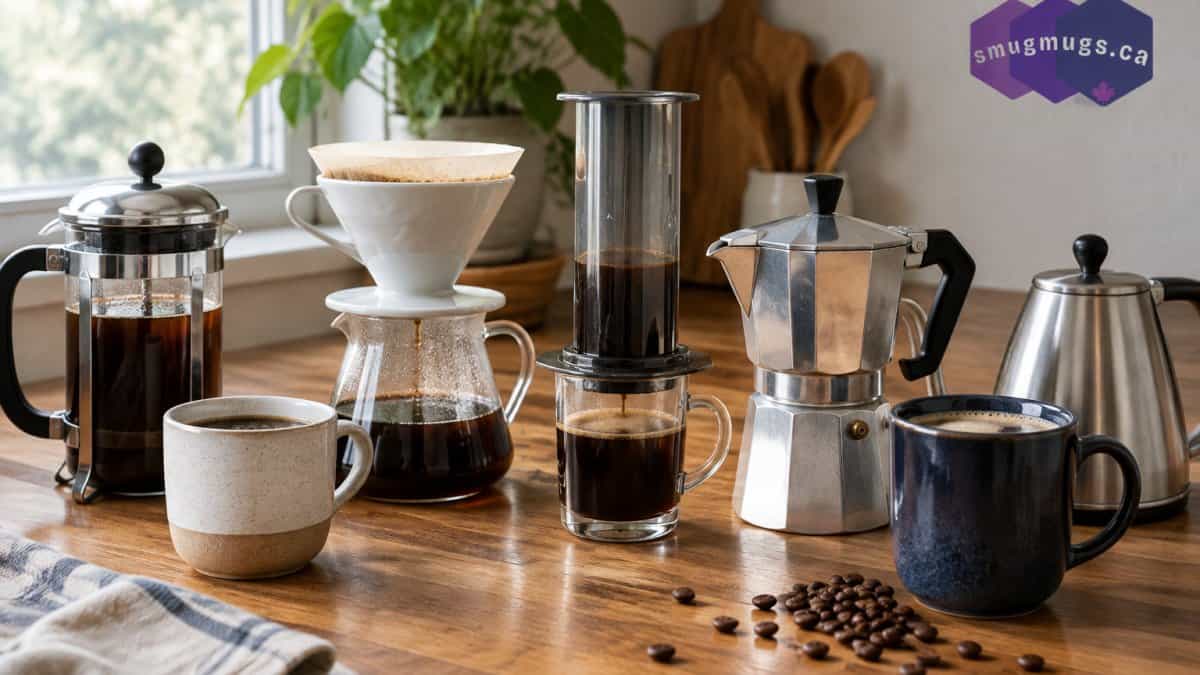
The five coffee brewing methods best suited to a daily ritual are French press, pour-over, AeroPress, drip coffee maker and moka pot. Choose one by matching it to how much time you have, how many cups you need and how much cleanup you will tolerate.
Picture your morning. The kettle clicks off, you reach for the coffee, and the coffee brewing methods you choose set the tone for the next hour. Pick the wrong one and you rush through a bitter cup. Pick the right one and the ritual becomes the best part of your day. This guide from SmugMugs.ca walks you through five brewing methods that suit a daily ritual, so you can choose the one that fits your mornings and your mood.
A brewing method is simply the way water meets coffee grounds. If you are still building the habit itself, start with a practical guide to creating a coffee ritual at home before you pick a method. That single choice affects flavor, body, cleanup, and how long you spend standing at the counter. Some methods demand careful attention. Others let you walk away and come back to a finished pot.
Think about what you actually want from your morning. Do you want a few quiet minutes with a rich, slow cup? Or do you need something fast before the school run? Your answer points you to a different method.
Watch out: A method that looks impressive online can become a chore by Wednesday. Choose one you will still enjoy on a busy day.
Here is a quick summary of the five methods we cover. Use it to narrow your choices before reading the details.
| Method | Time to Brew | Effort | Cleanup | Best For |
|---|---|---|---|---|
| French press | About 4 minutes | Low | Moderate | Full-bodied, unhurried mornings |
| Pour-over | About 3 to 4 minutes | Medium to high | Low | Clean, bright, meditative cups |
| AeroPress | About 2 minutes | Low | Low | Fast, portable, forgiving brews |
| Drip coffee maker | About 5 minutes | Very low | Low | Batch brewing for a crowd |
| Moka pot | About 5 minutes | Low | Low | Strong, espresso-like coffee on the stove |
Time to Brew
Notice that no single method wins on every point. The best ritual is the one that matches your schedule, your taste, and how much effort you want to spend.
The French press is the classic slow-morning method. You add coarse grounds to hot water, let them steep, then press the filter down. The result is a heavy, rich cup with plenty of body because the grounds stay in contact with the water and the metal mesh lets more oils and fine particles through than a paper filter does. To keep that cup warm through a slow morning, see why ceramic mugs hold heat better.
A repeatable starting recipe:
The ritual, step by step:
Watch out: A coarse grind matters. Too fine and you get sludge in the cup and a plunger that jams; too coarse and the cup tastes thin and underdeveloped. If your first attempt is muddy, grind coarser before changing anything else.
Ritual fit: The French press rewards patience but asks little of your hands, you set it up, wait, and press. It suits a slow weekend morning or a workday where you want a few quiet minutes before the day starts. Cleanup is moderate: dump the grounds, rinse the carafe and mesh, and you are done. It works best for couples and small households rather than a solo drinker who wants just one cup.
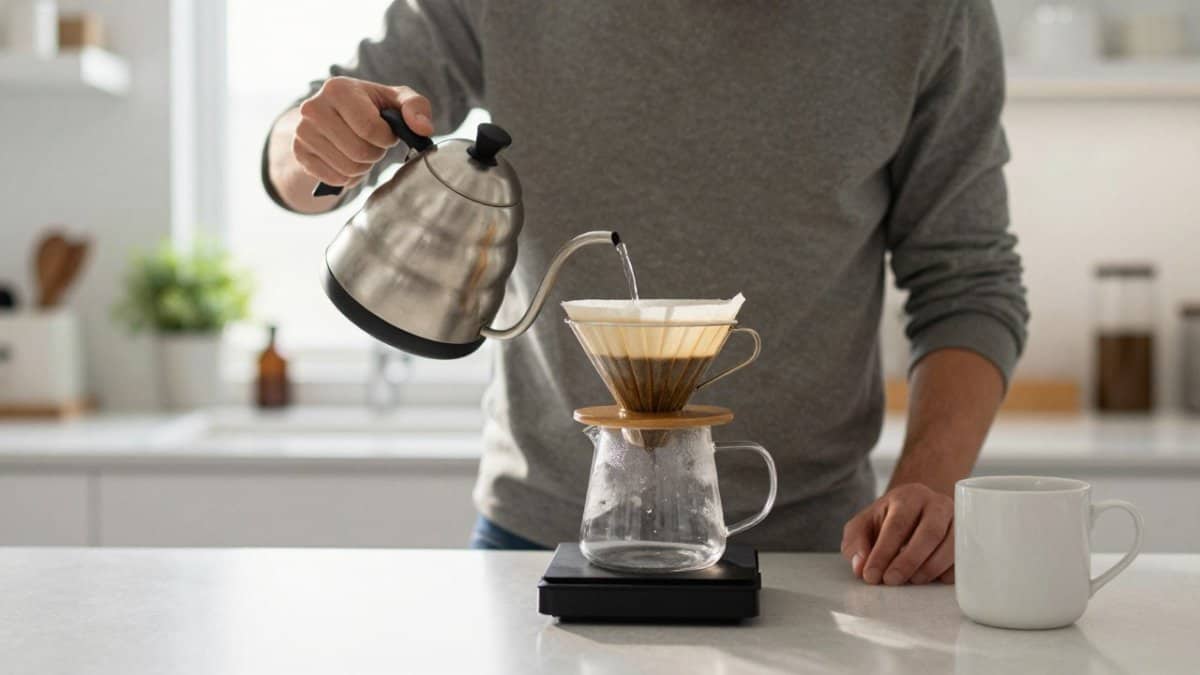
Pour-over is a hands-on ritual. You place a paper filter in a dripper, add medium-fine grounds, and pour hot water in slow circles. The process asks for focus, which is exactly why many people love it.
The paper filter catches oils and fine particles, so the cup tastes clean and bright. If you are weighing vessels for this slow pour, compare ceramic and glass mugs for holding heat. It takes more practice than other methods, but the payoff is a cup you can taste clearly.
Pour-over suits someone who enjoys the process as much as the coffee. Give yourself a few tries before you judge it.
If your mornings are rushed, the AeroPress is hard to beat. You add grounds and water, stir briefly, then press the plunger down in about 30 seconds. The whole brew takes around two minutes.
The AeroPress is forgiving. Small changes in grind size or water temperature do not ruin the cup, which makes it a good first choice for beginners. It is also light and easy to pack, so it works on trips and in small kitchens.
Watch out: The AeroPress makes a small cup. If you want a full mug, you may need to brew two.
Most guides stop at flavor. But a brewing ritual only survives if it fits the morning you actually have, not the one you wish you had. Use three questions to narrow the field: How much time do you have? How many cups do you need? How much cleanup can you tolerate before you have to leave? If your ritual happens at a desk at home, this guide to mugs for a home office covers options suited to that routine.
By schedule:
By household size:
By effort and cleanup:
A simple way to decide: Map your week before you buy anything. Note which mornings are frantic and which are unhurried, and how many cups you actually drink. Then pick one method for your default mornings and, if you like, a second for your slow days. A ritual you can keep on a busy Wednesday is worth more than one that only works on a Sunday.
Watch out: The most impressive method online is often the one with the most steps. If your mornings are tight, a fussy ritual becomes a chore by midweek, choose the method you will still enjoy when you are running late.
You do not need to master all five methods at once. Pick the one that sounded most appealing as you read, and brew it tomorrow morning. Notice how it feels, what you like, and what frustrates you. Adjust from there.
Once your ritual feels right, the right mug makes it even better. Our guide to the best ceramic mugs for coffee lovers covers options that suit home brewing. Browse the full collection at SmugMugs.ca and find a mug with personality to hold your morning brew. Shop All Mugs at SmugMugs.ca and make your ritual your own.
Final Sip
The best brewing method is the one you will actually use. Whether you love the slow patience of a French press or the quick win of an AeroPress, your morning is worth a good cup. Start tomorrow, and let your coffee tell the world a little about who you are.
The five methods covered here are French press, pour-over, drip coffee, AeroPress and the moka pot. Each one extracts flavour differently: immersion methods like the French press steep grounds in water for several minutes, while pour-over and AeroPress rely on controlled pouring and pressure. Drip machines offer the most hands-off option, and the moka pot delivers a concentrated, espresso-like cup on the stove. Choosing among them depends less on which tastes best in the abstract and more on how much time, effort and cleanup your morning can absorb.
The best method is the one you will actually repeat. A French press suits slow weekend mornings because it takes about four minutes of steeping and rewards patience with a full-bodied cup. A pour-over suits anyone who enjoys a quiet, hands-on routine and wants a clean, bright result. If your mornings are rushed, an AeroPress brews a single cup in a couple of minutes with very little cleanup, which makes it easier to keep the habit going on busy weekdays.
A drip coffee maker is the simplest starting point because it requires only grounds, water and a button press. An AeroPress is also forgiving for beginners, since small changes in grind size or steep time produce predictable results and the recipe is easy to repeat. Start with freshly ground coffee, measure your dose and water so you can compare batches, and adjust one variable at a time. Consistency matters more than equipment when you are learning.
Place a paper filter in a pour-over dripper, rinse it with hot water to remove paper taste and warm the cup, then add medium-fine grounds. Pour a small amount of water to bloom the grounds for about 30 seconds, then pour the rest in slow, steady circles until you reach your target volume. A common starting ratio is about 1:16 coffee to water, adjusted to taste. Keep your water near the boil, and aim for a total brew time of roughly three to four minutes.


