
Last Updated: October 5, 2026
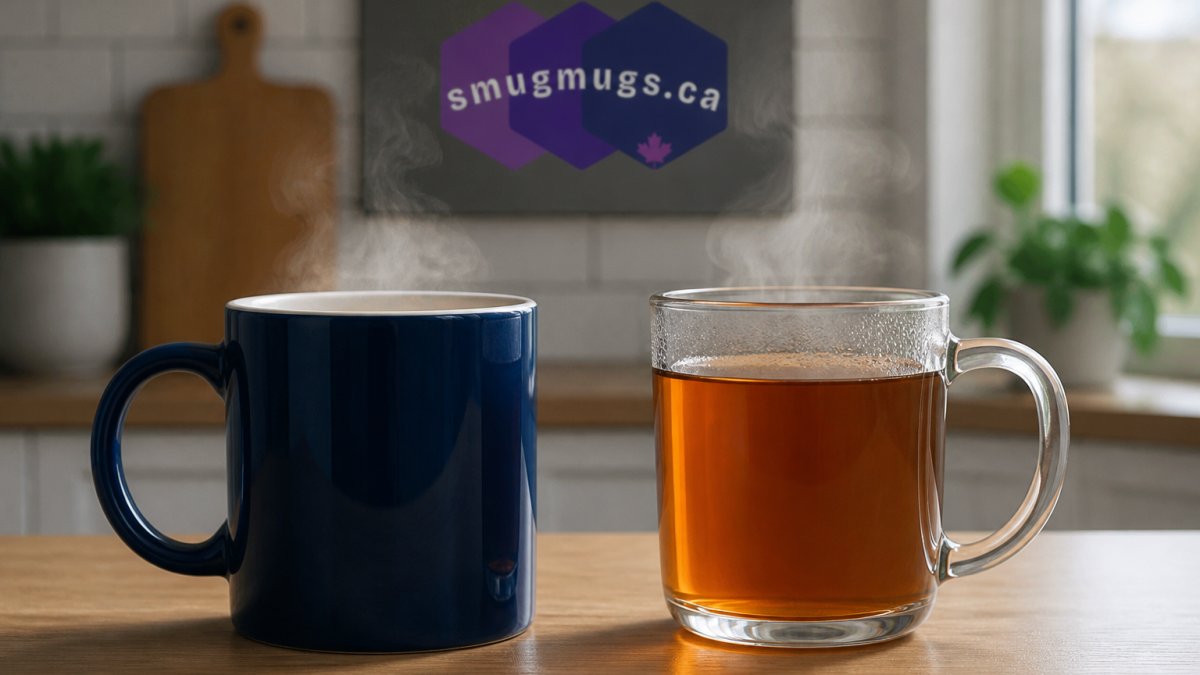
Ask anyone who has nursed a lukewarm coffee through a morning meeting: the mug matters. If you’ve ever wondered is ceramic better than glass mugs, the short answer is that ceramic wins on heat retention and glass wins on visibility, and which one you should buy depends entirely on how you drink.
Here’s the thing most comparison posts skip: the two materials aren’t competing on the same axis. Ceramic is dense and opaque, so it holds heat and hides the mess. Glass is non-porous and transparent, so it shows you exactly what you’re drinking and cleans up without staining. Neither is “better” in the abstract.

| Factor | Ceramic Mug | Glass Mug |
|---|---|---|
| Heat retention | Strong | Moderate |
| Flavor neutrality | Good if glaze is intact | Excellent |
| Breakage risk | Chips, cracks | Shatters |
| Visibility | Opaque | Fully transparent |
| Weight | Heavier | Lighter |
| Microwave | Usually safe | Check the label |
| Dishwasher | Usually safe | Usually safe |
| Design range | Wide | Limited |
Heat retention comes down to how much thermal energy a material can absorb and how slowly it releases it.
That’s the textbook version. The practical version is messier, because four variables decide how fast your coffee actually cools, and material is only one of them.
1. Wall thickness and mass. A thick-walled ceramic mug holds more thermal mass, so it steals a bigger initial hit of heat from your drink but then returns it slowly.
2. Mug shape and surface area. A tall, narrow mug exposes less liquid surface to the air than a wide, shallow one of the same capacity. Less exposed surface means less evaporative and convective loss.
3. Starting temperature. Preheating the mug with hot tap water for 30 seconds changes the outcome more than switching materials does.
4. Lid and drinking pattern. A lid traps rising heat and cuts evaporative loss dramatically. Sipping frequently also stirs the liquid and redistributes heat, which slows the drop at the surface.
Most “ceramic keeps coffee hot for hours” claims online are anecdotal, not measured. Without a thermometer and a stopwatch, “still warm” is a feeling, not a result. If you want to test your own mugs, pour the same volume of water at the same starting temperature into each, leave both unlidded in the same room, and check with an instant-read thermometer at 10, 20, and 30 minutes. That’s the only comparison that controls for the variables above.
What you’ll typically see: a thick ceramic mug and a double-walled glass mug land in a similar range over the first 20 minutes, while a thin single-wall glass mug falls behind fastest. The gap between a good double-walled glass mug and a thick ceramic mug is smaller than most comparison posts imply.
The pros and cons of ceramic mugs come down to one trade-off: they hold heat and take a design beautifully, but they can chip. Ceramic is dense, so it retains warmth, and the surface takes glaze, print, and color in ways glass simply can’t. That’s why almost every funny, sarcastic, or sentimental mug you’ve ever been gifted is ceramic.
The drawbacks are real, though. Drop a ceramic mug on tile and you’re likely looking at a chip or a crack. Cheap glazes can also develop crazing over time, those fine hairline cracks that trap coffee oils and dull the flavor.
The pros and cons of glass mugs flip the ceramic list almost exactly. Glass is non-porous and doesn’t absorb flavor, odor, or color, so a glass mug stays neutral cup after cup. It also lets you see the drink, which matters if you’re into layered lattes or want to check your tea’s strength at a glance.
The catch is fragility and heat loss. Glass shatters rather than chips, and thin glass loses heat fast.
Flavor purity is where glass has a genuine edge, and it’s not marketing. Glass is non-porous, so it won’t hold onto the oils from yesterday’s dark roast or the tannins from your tea. Ceramic can do the same, but only if the glaze is intact and non-porous.
Here’s the part most guides get wrong: a well-glazed ceramic mug is just as flavor-neutral as glass. The problem is worn or crazed glaze, which is porous and traps residue. If your ceramic mug tastes like old coffee no matter how you wash it, the glaze is the culprit, not the material.
According to Health Canada’s guidance on food-contact surfaces, food-contact materials must not transfer harmful substances to food or drink, which is why checking that a mug’s glaze is rated food-safe matters more than the ceramic-versus-glass debate itself.
The best mug material for coffee depends on how you drink it. Slow sippers who want warmth to last should choose thick ceramic. Fast drinkers, tea enthusiasts, and anyone who wants to see the color of their brew should choose glass.
For tea specifically, glass has a slight edge because you can watch the color develop and pull the bag at exactly the right moment. For coffee, especially if you’re the type to pour a mug and forget it for twenty minutes, ceramic is the practical choice.
If you want a mug that says something about you, that’s a third category entirely. SmugMugs.ca builds ceramic mugs with attitude, the kind that carry a joke, a mood, or a message into every meeting. Durability and heat retention come standard with ceramic; personality is the bonus.
Microwave-safe mug materials are those without metallic trim, metallic glaze, or unglazed clay. Plain glazed ceramic and borosilicate glass are generally microwave safe. Anything with a gold rim, a painted metallic band, or a crackled finish should stay out of the microwave, because metal in the decoration can arc and scorch.
There’s a second microwave issue most guides skip: unglazed or crazed ceramic can absorb water into the clay body, and that trapped moisture heats unevenly and can crack the mug from the inside. If the glaze is intact and the label says microwave safe, you’re fine. If the surface looks webby or dull, retire it from microwave duty.
Not all glass handles heat the same way, and the difference matters more than the ceramic-versus-glass debate for anyone who moves a mug between hot and cold.
If you can’t tell which you have, treat it as soda-lime and warm it gradually.
Thermal shock is the stress a material feels when one part of it heats or cools faster than another. Sudden temperature swings, like pouring boiling water into a cold mug or running a hot mug under cold water, can crack either material. Glass is more vulnerable than ceramic, and soda-lime glass is the most vulnerable of the common options.
A few habits prevent almost all thermal-shock failures:
Check the manufacturer’s label before microwaving or dishwashing any mug, and when in doubt, hand wash. A mug that survives a decade of daily use is usually one that was treated gently, not one made of a magically tough material.
Durability favors ceramic in the chip department and glass in the crack department, which sounds contradictory until you picture the failure modes.
For daily handling, weight and grip matter as much as material.
That checklist is the fastest way to avoid the “chipped after three months” problem that plagues cheap mug sets. Buy for the failure mode you can live with: a chipped ceramic mug still works, a shattered glass mug doesn’t.
So is ceramic better than glass mugs? For most people, most mornings, yes, and the reasons are boring but real: it holds heat, it survives a bump, and it carries a design.
If you’re ready for a mug that keeps your coffee warm and makes your coworkers ask where you got it, browse the SmugMugs.ca collection. Every mug is ceramic, built for daily use, and designed to say something.
The mug you reach for every morning is a small daily decision, and it’s worth getting right. Ceramic gives you warmth and personality; glass gives you clarity and a shorter window to enjoy it. Pick the one that fits how you actually drink, and your coffee routine gets a little better every single day.
It depends on what you value most. Ceramic holds heat longer because its density and typical wall thickness slow heat transfer, and it comes in a wider range of designs. Glass lets you see the drink, resists staining and odor, and handles thermal shock better when made from borosilicate. For everyday hot coffee, ceramic usually wins on warmth; glass wins on visibility and cleanup.
Ceramic generally keeps coffee hot longer than single-wall glass. Ceramic’s higher density and thicker walls absorb and radiate heat more slowly, so your drink cools at a gentler rate. A double-walled glass mug narrows the gap considerably by trapping an insulating layer of air between its two walls. Wall thickness matters as much as the material itself.
Most plain ceramic and borosilicate glass mugs are microwave safe, but check the base for a microwave-safe label. Avoid any mug with metallic paint, gold or silver rims, or metallic glaze details, since these can arc and damage the microwave. Vintage or handmade glazes of unknown composition are best kept out of the microwave unless the maker confirms they are safe.
Glass mugs tend to chip or shatter more readily on impact than ceramic, which is thicker and more forgiving of knocks. However, borosilicate glass resists thermal shock better than many ceramics, so it handles sudden temperature changes without cracking. If you are clumsy at your desk, ceramic usually survives longer; if you pour boiling water into a cold mug, glass may be the safer choice.


