
Last Updated: September 22, 2026
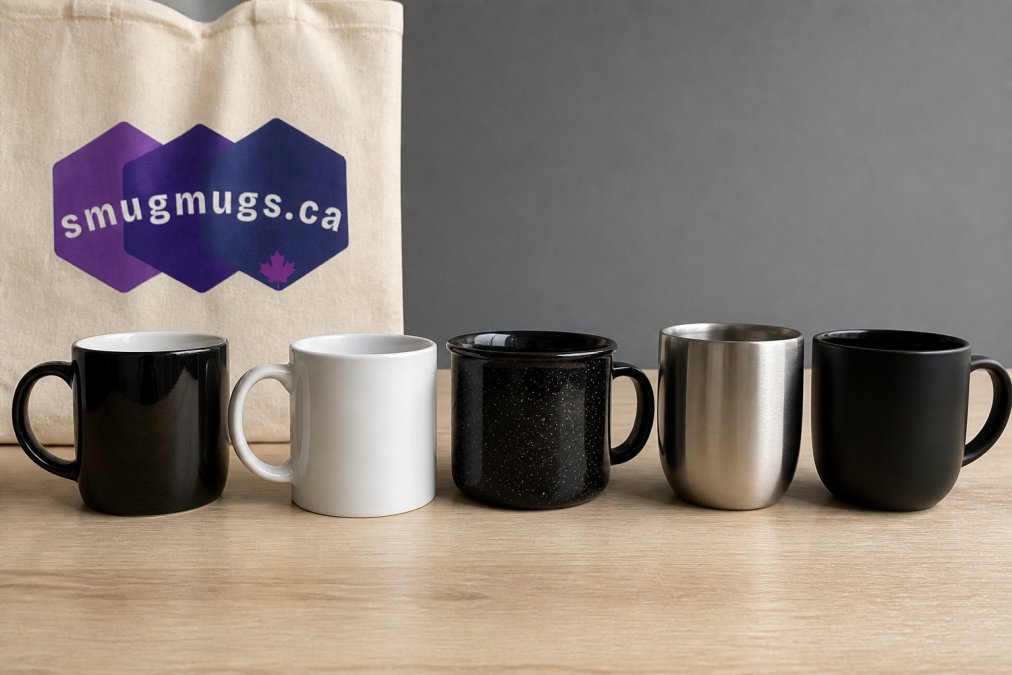
In any wicked burn vs comparison, Wicked Burn built its reputation on sarcastic, confrontational mug designs, and that narrow focus is exactly what shapes how it stacks up against the wider field. This comparison from SmugMugs.ca looks at what you actually get when you buy into that brand versus ceramic humor mugs, vacuum-sealed travel tumblers, and smart-heating options.
Here’s the honest version: Wicked Burn is a design-first brand. So is SmugMugs.ca. Neither is trying to out-engineer a Stanley or a Zojirushi, and that distinction matters more than most buyers realize.
Wicked Burn vs other mug brands comes down to a simple trade-off. If your priority is a line that makes a coworker snort coffee through their nose, a ceramic humor mug wins. If your priority is coffee that stays hot through a three-hour meeting, a vacuum-sealed tumbler wins. Few brands do both well.
| Brand Type | Best For | Heat Retention | Dishwasher Safe | Personality |
|---|---|---|---|---|
| Ceramic humor mugs (SmugMugs.ca) | Office personality, gifting | Moderate | Usually yes | High |
| Wicked Burn-style design mugs | Sarcastic statement pieces | Moderate | Varies by design | High |
| Vacuum-sealed tumblers | Commutes, long meetings | Excellent | Often yes | Low |
| Smart-heating mugs | Temperature precision | Controlled | No | Low |
Below, we’ll break down insulation, lid design, durability, and what you actually pay for, so you can pick the right mug instead of the loudest one.
The insulation gap between ceramic and vacuum-sealed stainless steel is the single biggest functional difference in this category, and it’s worth understanding the mechanism rather than just the outcome.
A vacuum-sealed tumbler works by removing the air between two stainless steel walls. With almost no air molecules to conduct heat, the coffee inside loses temperature mainly through the lid and the small amount of conduction at the rim. A ceramic mug has no such barrier. Its walls conduct heat directly from the coffee to the surrounding air, so the drink cools steadily from the moment it’s poured.
What that looks like in practice:
That doesn’t make ceramic a bad choice. It makes it a different one. If you drink your coffee within 20 minutes of pouring, ceramic insulation is a non-issue. If you forget your mug on a desk for two hours, it’s the whole ballgame.
Insulation isn’t the only thing the mug body affects. The interior material also shapes how the coffee tastes over time, and this is where ceramic and stainless steel diverge in a way that rarely gets covered.
Ceramic is largely non-reactive. It doesn’t hold onto oils or aromatics from previous drinks, so a mug that held black coffee yesterday tastes neutral with tea today. Stainless steel interiors are also non-reactive in theory, but in practice they can pick up and carry notes from previous drinks if they’re not cleaned thoroughly, especially around the lid threads and gasket. A worn or scratched interior coating makes that worse.
If you switch between coffee and tea in the same mug, or you drink acidic blends, ceramic is the more forgiving choice. If you drink the same thing every day and value temperature above all, stainless steel wins.
You don’t need lab equipment. Pour the same volume of near-boiling water into each mug, leave both in the same room, and check the temperature at 15, 30, and 60 minutes with a cheap instant-read thermometer. The pattern will be obvious: ceramic drops fast, vacuum-sealed holds, and double-walled ceramic lands somewhere in the middle. This is the same basic method most hands-on reviewers use, and it takes about an hour to run.
Leak-proof performance depends almost entirely on the lid, not the mug body. A threaded lid with a silicone gasket seal will outlast a push-on lid every time, and a locking mechanism beats both for tossing a mug into a bag.
Here’s what to look for:
Most reviews test a mug the day it arrives. That tells you almost nothing about how it will perform after six months of daily use, and the lid seal is where the real story is.
Silicone gaskets are the first component to fail. Heat cycling, dishwasher detergent, and repeated compression cause the silicone to harden, flatten, and lose its rebound. When that happens, a mug that was leak-proof in January starts sweating through your bag by summer. The mug body is still perfectly good.
This is the angle almost no comparison guide covers, and it’s the one that matters most after the first year.
Don’t judge leak resistance by how tight the lid feels on day one. Fill the mug with water, seal it, turn it upside down over a sink, and shake it for thirty seconds. Then leave it on its side for ten minutes. A mug that passes both tests cold may still fail with hot liquid, because heat softens the gasket and expands the contents.
Funny office mugs are ceramic drinking vessels printed with humor, sarcasm, or inside-joke messaging, designed to sit on a desk as both a functional cup and a small personal statement. They trade thermal performance for personality, and for a lot of office workers that’s a fair deal.

For teams, the safer play is a design that’s funny to the person holding it and invisible to everyone else. Inside jokes, subtle typography, or a private-reference design all work. If you’re ordering in bulk for a team, ask about customization so the humor fits your group rather than a generic template.
Price-to-performance in mugs tracks three things: insulation technology, lid complexity, and design. You’re not paying more for ceramic itself; you’re paying for the printing, the design catalog, and how niche the joke is.
Long-term seal degradation is the failure mode nobody warns you about. Silicone gaskets compress, harden, and stop sealing properly over months of heat cycling and dishwasher runs. When that happens, a mug that was leak-proof in January starts sweating through your bag by summer.
The mug market splits cleanly, and pretending otherwise doesn’t help anyone. Wicked Burn and similar design-first brands win on attitude. Vacuum-sealed tumblers win on heat retention. Smart mugs win on precision. None of them win on all three, so pick the one that matches how you actually drink.
NSF International standards for food equipment and consumer drinkware
Statistics Canada data on household e-commerce spending
Wicked Burn mugs are ceramic, so they work well for daily desk use if you drink your coffee within a reasonable window. They do not have vacuum insulation, meaning heat escapes faster than a stainless steel travel mug. For a standard office day where you sip over 30 to 45 minutes, a ceramic mug with a solid glaze performs fine. If you need coffee to stay hot through back-to-back meetings, a double-walled option is a better fit.
Ceramic mugs like Wicked Burn or SmugMugs.ca offer better drinking comfort, a wider rim, and more design variety. Insulated thermal cups such as the Zojirushi or Yeti Rambler keep beverages hot for hours thanks to vacuum-sealed double walls. The trade-off is weight, lid complexity, and less personality. For a desk where the mug rarely leaves your hand, ceramic wins on experience. For commuting or long gaps between sips, thermal cups win on temperature stability.
Three things matter most: whether it fits a standard cup holder or desk coaster, how easy it is to clean, and whether the design makes you smile. Brands that offer dishwasher-safe ceramic, a comfortable handle, and a tapered base tend to perform best. SmugMugs.ca focuses on the personality side with funny office mugs and sarcastic designs, while brands like Yeti and Zojirushi focus on insulation and durability. The right pick depends on whether you value character or thermal efficiency more.
A mug with a witty message can be a low-stakes icebreaker. It gives coworkers something to comment on and can lighten the tone in a shared kitchen. That said, the humor needs to land well with your specific team. A sarcastic mug works in a casual office but may feel out of place in a formal client-facing environment. Choosing office humor alternatives for serious teams, like dry wit or understated designs, keeps the personality without the risk.


