
Last Updated: September 14, 2026
A ceramic mug works as a birthday gift because it gets used every day, not shoved in a drawer after the candles are blown out. That daily contact separates a forgettable present from one that earns a spot on the desk.
This guide from SmugMugs.ca covers picks for unique ceramic mugs for birthday gifts.
The best options share three traits: a material that survives real use, a design that matches the recipient’s personality, and a shape that feels right in the hand.

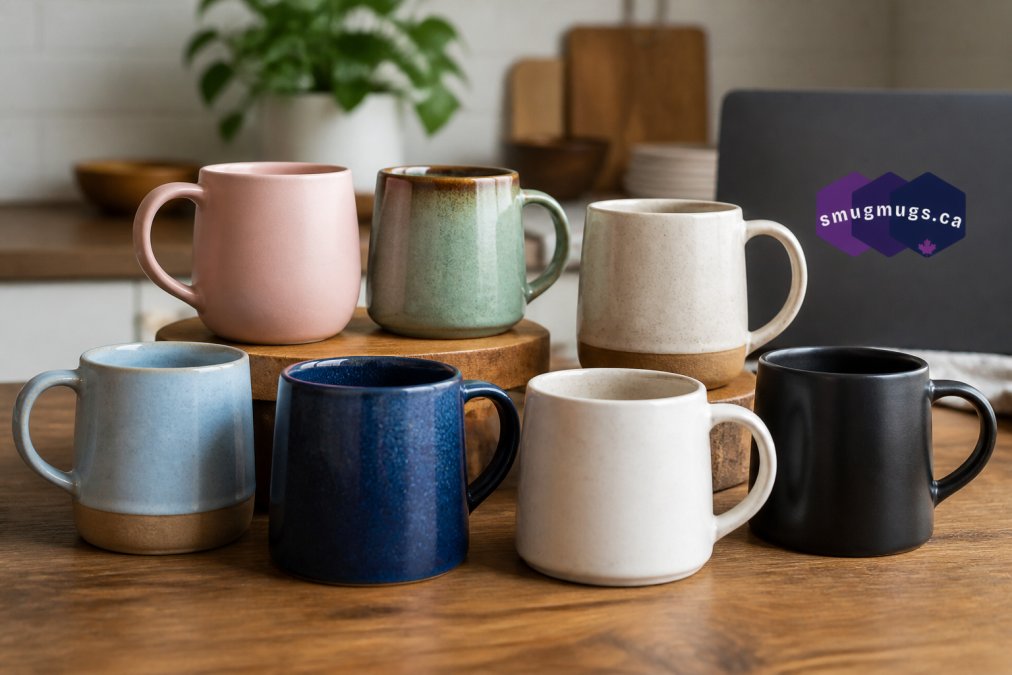
Our top pick is SmugMugs.ca because it solves the hardest part of mug gifting: finding a design that actually sounds like the recipient. The collection spans funny, sarcastic, sentimental, and inspirational messaging, so there’s a match for nearly any personality.
Best for: Anyone whose sense of humor deserves to sit on a desk.
Pros:
Cons:
One customer put it simply: “This store is great! It has stuff I never knew I needed.”
For a coworker with a dry sense of humor or a friend who sends sarcastic texts at 7 a.m., this is the easiest win on the list.
Customization is where a mug stops being a product and becomes a keepsake. Some sellers offer hand-drawn floral designs that can carry a name, a birth date, or a short message, bought directly from independent artists.
This is also the strongest option if you’re hunting for [unique gift ideas for coffee lovers] who already own every gadget.
Matching a mug to a person is less about taste and more about how they actually drink. A mug that feels wrong in the hand gets relegated to the back of the cupboard, no matter how good it looks.
Stoneware and porcelain are the two main ceramic families, and they behave differently.
This is the most overlooked factor in mug gifting. A handle that’s too small forces a cramped grip; one that’s too large makes the mug feel unstable. The best handles allow a full finger wrap without the knuckles touching the body.
An 11-ounce mug suits a standard serving; a 15-ounce mug suits someone who drinks slowly or uses it for soup or oatmeal. Oversized mugs are awkward for smaller hands, and undersized mugs frustrate people who like a full cup.
If you’re unsure, 12 to 14 ounces is the safest middle ground for most adults.
A mug on its own is a nice gesture; paired with something the recipient will actually use, it’s a complete gift. Consider these pairings:
| If the recipient… | Prioritize… | Because… |
|---|---|---|
| Drinks coffee daily | Stoneware, 12-14 oz, ergonomic handle | Heat retention and comfort matter most |
| Drinks tea daily | Porcelain, 10-12 oz, thin rim | Flavor clarity and a delicate feel |
| Has a quirky sense of humor | Messaging-forward design | The mug does the emotional work |
| Values minimalism | Neutral glaze, simple silhouette | It fits their existing kitchen aesthetic |
| Lives in a small space | Standard size, stackable shape | It won’t dominate the cupboard |
| Is hard on their belongings | Chip-resistant stoneware, dishwasher safe | It survives real use |
Ask yourself: will this person reach for this mug on a Tuesday morning when they’re tired and not thinking about gifts? If yes, you’ve chosen well. If maybe, keep looking.
Handmade ceramic mugs are built to last, but they’re not indestructible. The difference between a mug that looks new after five years and one that’s dull and scratched after five months comes down to a few consistent habits.
This is the single most important step. A maker who fires their own glazes knows exactly what those glazes can handle. Some hand-painted and reactive-glaze pieces are dishwasher safe; others are not. Some are microwave safe; others contain metallic accents that will arc. The maker’s guidance always overrides general advice. If the label is missing or unclear, default to hand washing.
Thermal shock happens when ceramic experiences a rapid temperature change (britannica.com). The material expands or contracts faster than it can adjust, and the result is a crack, sometimes immediate, sometimes a hairline fracture that fails weeks later.
Common causes:
To avoid it, let the mug come to room temperature before adding hot liquid, and let it cool before washing.
Dishwasher detergent is abrasive, and repeated cycles can dull a glaze over time. Hand-painted designs, gold or metallic accents, and reactive glazes are the most vulnerable. If the design is the whole point of the gift, hand wash it. If the mug is a plain piece used daily, the dishwasher is fine.
Coffee and tea leave behind tannins that can stain the interior of a mug over time and leave a lingering odor (pubmed.ncbi.nlm.nih.gov).
Never use abrasive scrubbers or steel wool on a glazed ceramic mug. They scratch the surface, which creates tiny grooves where stains and bacteria can settle.
Stacking mugs saves space, but it’s hard on hand-painted rims and delicate glazes. If you must stack, place a soft cloth or paper towel between mugs to prevent scratching, and avoid stacking heavy mugs on top of lighter ones, the weight can chip the rim underneath. Better yet, hang mugs from a rack or store them in a single layer if space allows.
A mug with a hairline crack, a chipped rim, or a flaking glaze should be retired from daily use (Industry Guide to the Glazed Ceramics and Glassware Regulations). Cracks can harbor bacteria, and a chipped rim can cut a lip. If it has sentimental value, it can still serve as a pen holder or decorative piece, but it shouldn’t hold hot liquid.
A well-cared-for mug can last decades. That longevity is part of what makes a ceramic mug a good gift: it’s not disposable, and the care habits above turn a nice gift into a daily companion that outlasts the birthday it was given for.
The best birthday mug isn’t the fanciest one on the shelf. It’s the one that gets picked up every morning because it fits the person holding it, whether that means a sarcastic one-liner or a hand-painted floral with their name on it.
If you want the widest range of personality-driven designs in one place, start with SmugMugs.ca. The collection is organized by mood, the mugs are built as statements rather than plain drinkware, and it’s a Canadian-based business, so ordering for a friend across the country is simple.
A ceramic mug works as a birthday gift because it combines daily usefulness with personal expression. Unlike flowers or candles, it gets used every morning, which keeps the gift present in the recipient’s routine. Look for a comfortable ergonomic handle and a design that matches their personality, whether that means a sarcastic slogan or an inspirational message. A mug that reflects who they are feels more thoughtful than a generic option.
Start with how they drink. Consider their aesthetic: minimalist glazes suit some people, while quirky designs suit others. Check that the mug is microwave and dishwasher safe if they rely on convenience, and confirm the handle feels balanced in hand. Personalization, like a name or inside joke, pushes a good mug into memorable territory.
Mugs can differ in consistency, weight, and character. Some pieces are often kiln-fired in small batches, which means slight variations in glaze and shape, and many use lead-free, non-toxic finishes. Mass-produced mugs cost less and are easier to replace, but they can chip sooner and rarely feel one-of-a-kind. For a birthday gift, a unique mug signals effort and thought, which matters more than the price difference for most recipients.
Check for a lead-free and non-toxic label. Reputable makers test their glazes and state this clearly. Avoid unglazed interior surfaces, which can harbor bacteria, and skip mugs with cracked or crazed glaze. Read the product description for food-safety claims and reviews mentioning durability. A dishwasher-safe and microwave-safe rating is a good sign the finish will hold up.
Hand-washing with warm water and mild soap extends the life of ceramic mugs, even when the maker lists them as dishwasher safe. Avoid sudden temperature changes, like pouring boiling water into a cold mug or moving it straight from the freezer to the microwave, since thermal shock can crack the glaze. Skip abrasive scrubbers on delicate finishes. Dry upside down to prevent moisture pooling in the base, and store mugs without stacking heavy items on top.


