

Last Updated: September 6, 2026
The most common cause of a chipped rim isn’t clumsy hands or bad luck; it is the tiny, invisible collisions that happen during washing, drying, and stacking. Ceramic is a brittle material, meaning it doesn’t bend under pressure; it cracks or breaks instead (Britannica’s definition of ceramic composition and properties). A mug’s glaze is tough against scratches but vulnerable to point impacts, which is why the rim and handle are the first areas to fail.
Most people treat a chipped mug as an inevitability, but it is actually a predictable outcome of a few specific habits. At SmugMugs.ca, we offer ceramic drinking vessels for daily use. Understanding the mechanics of why mugs chip is the first step to preventing it, and this guide covers the practical habits that keep your favorite mug intact for years.
Preventing mug chipping is about controlling impact points, managing temperature changes, and choosing the right cleaning tools. Below, we break down the exact routines and storage methods that protect your ceramic ware.
Thermal shock is the stress ceramic experiences when its temperature changes too quickly, and it is a leading cause of micro-cracks and sudden breakage (ScienceDirect’s explanation of thermal shock in materials). Pouring boiling water into a cold mug straight from the fridge, or running a hot mug under cold tap water, causes the material to expand or contract unevenly. This stress creates invisible micro-cracks that weaken the surface integrity over time, eventually leading to a chip or a full crack.
To prevent thermal shock, let your mug adjust to room temperature before adding hot liquid. Avoid placing a cold mug directly under a hot faucet, and never put a hot mug on a cold, wet countertop. Sudden temperature swings are the fastest way to compromise durability, so a little patience saves your mug from structural damage.
The sink is where most mugs meet their end, not from a single dramatic drop, but from repeated clinks against other dishes and hard surfaces. When washing, fill the sink with warm water and a soft cloth or sponge rather than scrubbing under a running tap where the mug can slip. Wash ceramic mugs one at a time, and never let them knock against metal utensils or other stoneware in the basin.
A common mistake is using a metal scrubber or abrasive sponge to remove stubborn coffee stains. While these tools are effective on baked-on food, they scratch the glaze, creating rough spots where the material is more exposed and vulnerable. Once the protective glaze is compromised, the ceramic body underneath is more likely to absorb water and chip.
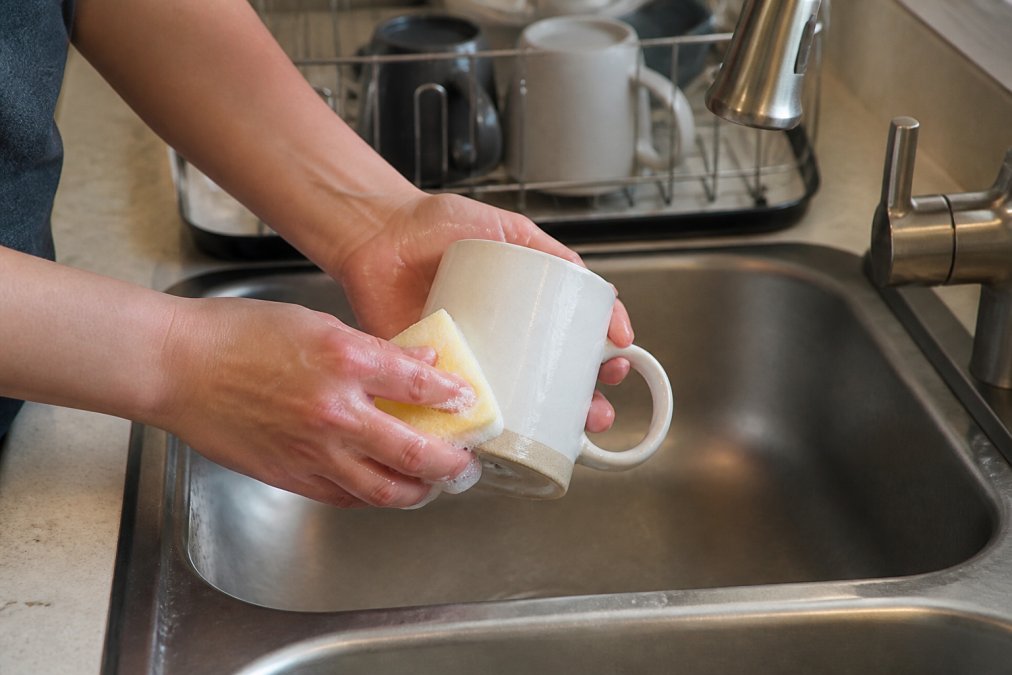
Hand-washing is the safest method for preserving a mug’s glaze and structural integrity, especially for mugs with intricate designs or metallic accents. The dishwasher exposes ceramic to high heat, strong detergents, and the physical impact of water jets and neighboring dishes, all of which can degrade the finish over time.
If you must use a dishwasher, place mugs securely on the top rack, spaced apart so they cannot clink together during the cycle. Ensure the mug is fully secured and cannot tip over, and select a gentle cycle if available. While many mugs are labeled dishwasher safe, the cumulative effect of frequent machine washing is a leading cause of glaze wear and rim chips.
Drying mugs by stacking them wet is a recipe for disaster, as the trapped moisture can cause them to stick together, leading to a sudden crack when you try to separate them. Instead, dry mugs individually with a soft towel and place them on a flat, stable surface. When putting them away, never stack mugs inside one another unless they have a protective liner, as the base of the top mug will grind against the interior glaze of the bottom one.
The correct method is to store mugs upright on a shelf with a little space between them. If you must stack, place a soft cloth or paper towel between each mug to buffer the impact points. This simple habit prevents the majority of rim chips that occur in storage.
Daily habits determine a mug’s lifespan more than any single incident, but the right habits depend on what your mug is actually made of. Stoneware, porcelain, and bone china are all ceramics, but they have different hardness levels, porosity, and thermal tolerances. Treating them all the same is a common cause of premature chipping.
Stoneware is the workhorse of the ceramic world. It is dense, durable, and less porous than earthenware, making it the best choice for everyday use. However, its thicker walls mean it holds heat longer, which also makes it more susceptible to thermal shock if you plunge it into cold water while hot. For stoneware, the most important daily habit is avoiding sudden temperature changes. Never run cold water into a hot stoneware mug to cool it down for a quick rinse; let it air cool first.
Porcelain is harder and more vitrified than stoneware, which gives it a smoother, more glass-like surface. This hardness makes it more resistant to scratching from utensils, but it also makes it more brittle. A porcelain mug dropped on a hard floor is more likely to shatter than a stoneware mug, which might just chip. When handling porcelain, avoid point impacts: don’t tap the rim to test for heat, and never use a metal spoon to stir with force against the interior walls. The glaze is tough, but the body underneath is unforgiving.
Bone china is the most delicate of the three, containing bone ash that gives it a translucent quality and a distinct ring when tapped. It is surprisingly strong in compression but very vulnerable to point impacts and thermal shock. For bone china, the daily rules are stricter: never microwave it, never put it in the dishwasher, and never stack it with other mugs. The material’s thin walls mean that even a minor knock against a faucet can cause a hairline crack that will eventually become a chip.
Beyond material type, the daily habits that matter most are about controlling impact points. Never use a mug to scoop ice or stir with metal utensils, as these actions create point impacts on the interior glaze. Avoid resting a spoon on the rim of an empty mug, as the weight can cause a chip if the mug is bumped. Handle your mug by the body rather than just the handle when it is full; the handle is the most fragile point and bears the full weight of the liquid.
When placing a mug down, set it on a soft surface like a coaster or a silicone mat rather than a hard countertop. This reduces the impact force on the base, which transfers stress up the sides of the ceramic. A final habit worth adopting is to inspect your mugs monthly. Run your finger along the rim and handle to feel for rough spots or tiny nicks. Catching a micro-chip early lets you retire the mug before it becomes a full crack while holding hot coffee.
Storage organization is the most overlooked aspect of mug maintenance. A crowded cupboard where mugs are wedged together guarantees collisions every time you reach for one. Dedicate a shelf to mugs and arrange them in a single row, handle facing outward, so you can grab one without disturbing the others.
For mugs you use less frequently, consider individual storage boxes or padded dividers. If you have a collection of fragile or sentimental pieces, hanging them on a wall rack keeps them safe and turns them into display items. The goal is to eliminate any scenario where one mug can knock against another.
A chipped mug is not always safe to use, and the risk depends entirely on the location and severity of the damage. A small nick on the outside base is a cosmetic issue, but a chip on the rim where your lips make contact is a different matter. The primary concern is that a chip exposes the porous ceramic body beneath the glaze, which can harbor bacteria that standard washing cannot remove.
The secondary risk is structural. A chip creates a stress concentration point, making the mug more likely to crack entirely under thermal shock or impact. If the chip is on the rim or handle, or if you can see a crack radiating from the chip, the mug should be retired from drinking use. Repurposing it as a pen holder or planter is a safer option than risking a break while holding hot liquid.
For a minor chip on the rim or base, a food-grade ceramic repair adhesive can restore the mug’s appearance and prevent further damage. The process requires precision: clean the area thoroughly, apply a small amount of gap-filling epoxy designed for ceramics, and clamp the piece firmly until the adhesive cures. After curing, sand the repaired area smooth with fine-grit sandpaper to blend the surface.
However, the critical question most guides skip is this: is a repaired mug safe for drinking, especially with hot liquids? The answer is rarely a clean yes. Most epoxy adhesives, even those labeled “food-safe,” are only rated for room-temperature contact (FDA guidance on food contact substances). They are not tested for repeated exposure to boiling water, coffee acids, or dishwasher detergents. When you pour hot liquid into a repaired mug, the adhesive can soften, degrade, or leach compounds into your drink. Any material that comes into contact with food and drink must be stable under the conditions of use. A DIY epoxy repair is not certified for that stability.
The structural issue is equally important. A chip creates a stress concentration point. Even after you fill it with epoxy, the bond between the adhesive and the ceramic is weaker than the original material. The repaired area becomes the new fault line. Under the thermal expansion of a hot beverage, the mug will likely crack again, often along the repair line. This is why a repaired mug is only safe for dry, room-temperature use.
So when is a repair worth it? Only for display purposes. If the mug has sentimental value, a repair can keep it on a shelf as a pen holder or a planter. But if the chip is on the rim where your lips make contact, or if you can see a crack radiating from the chip, do not attempt a repair for drinking purposes. The risk of bacterial growth in the porous ceramic body and the risk of structural failure while holding hot liquid are simply too high. Retire the mug from beverage duty and buy a replacement for your morning coffee.
Preventing mug chipping comes down to respecting the material: avoid thermal shock, wash with soft tools, store mugs with space, and retire damaged pieces. These habits are simple, but they require consistency. The reward is a mug that keeps its bold design and smooth rim for years, not months.
At SmugMugs.ca, we offer ceramic drinking vessels meant to handle daily life, but even the best mug needs a little care. Our collection features designs that make a statement, and protecting that statement is as easy as following the steps above. When a mug does reach the end of its life, it is an opportunity to refresh your rotation with a new personality.
Yes, for minor chips you can use a food-grade epoxy or ceramic repair adhesive. Clean the area, apply the adhesive to the chip, and let it cure for the time listed on the package. Once cured, sand the area smooth with fine-grit sandpaper. Keep in mind that a repaired mug is not as durable as before and should be hand-washed only. If the chip is on the rim where your mouth touches the mug, replacement is the safer option.
Ceramic is a brittle material, meaning it has high impact resistance to pressure but low tolerance for sudden shocks. Most chipping happens from two causes: banging against hard surfaces like sinks or other dishes, and thermal shock from sudden temperature changes. Pouring boiling water into a cold mug or moving it from the fridge to the microwave creates stress that weakens the glaze and structure over time, making it more vulnerable to chips.
A small chip on the base or handle is less risky, but any chip on the rim where you drink is a safety concern. Chipped areas can harbor bacteria that are difficult to remove, and the sharp edge can cut your lip. The bigger worry is that a chip compromises the surface integrity of the mug, making further damage more likely. If the chip is on the rim, replace the mug. For other areas, inspect it regularly for cracks.
Dishwashers can contribute to chipping, especially if mugs are loaded improperly and knock against other items during the cycle. The high water pressure and jostling create opportunities for impact. If you must use the dishwasher, place mugs securely on the top rack with space between items. However, hand-washing is the safest method to prevent mug chipping over the long term, particularly for mugs with sentimental or monetary value.
Caring for your mug properly is the difference between a cherished daily ritual and a frustrating replacement cycle. SmugMugs.ca offers a wide variety of categories for every mood, from funny and sarcastic to sentimental and inspirational, so you can find a mug that fits your routine and your personality. Explore our collection of ceramic drinking vessels that serve as personal statements and add character to your daily coffee. Shop All Mugs and keep your next favorite mug chip-free.


